
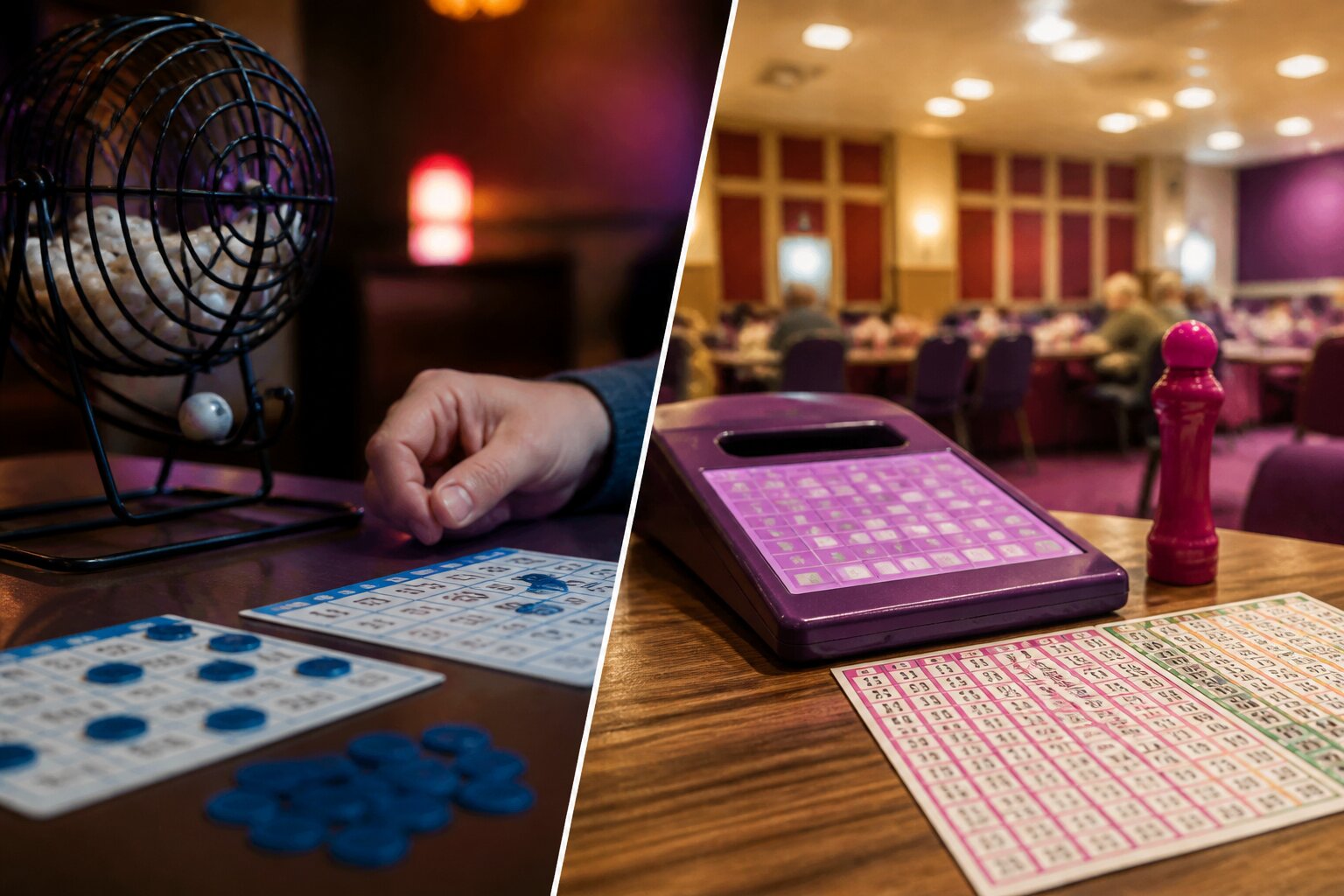
Bingo looks simple, but the way it’s played changes a lot between the US and the UK. Different card designs, numbers in play and prize structures give each version its own character.
If you’ve noticed that calls move faster in some games or that cards look unfamiliar in a hall or online, there are clear reasons why. Read on to find out exactly what sets American and UK bingo apart and what to expect when you try either style.
What Is the Main Difference Between American Bingo and UK Bingo?
The clearest distinction is the number of balls and the card layout. American bingo uses 75 balls and a 5x5 square card with a central “free” space. Winning is usually based on completing a pre-announced pattern across that grid — lines, shapes, corners and so on.
UK bingo is built around 90 balls and a different ticket shape: three rows by nine columns, with five numbers on each row (15 numbers total). Play typically progresses through prize stages: one line, two lines, and a full house.
These structural differences change the rhythm of the game. The 75-ball format tends to focus play around specific patterns, while the 90-ball game moves through clear prize milestones that guide how players mark tickets and follow the action.
How Do the Bingo Cards Differ?
American cards are compact and regular: five columns labelled by the letters B‑I‑N‑G‑O, and each column covers a fixed range of numbers. The central free square shortens the amount of marking needed and can speed up completion of patterns.
UK tickets are longer and more open visually. The nine-column layout leaves several blank spaces on each row, so numbers are arranged in a way that emphasises horizontal lines. Because each ticket contains 15 numbers, tracking progress is about covering rows rather than filling a geometric pattern.
These design choices affect how players read cards and how quickly they can spot wins. For newcomers, the 5x5 grid feels familiar and immediate; the 90-ball strip rewards a slightly different kind of attention as the game advances.
Number Calling: How Does It Work in Each Version?
In 75-ball games the caller pairs each number with its B‑I‑N‑G‑O letter — for example, “B‑7” or “O‑65”. That shorthand makes it easier to recognise whether a number could match your card at a glance.
In 90-ball play numbers are announced by value alone, sometimes accompanied by playful nicknames that many regular players enjoy. The caller simply states “number 22” or “sixty‑eight”, and players check their strips for that figure.
Both formats rely on clear announcing so players can mark cards correctly. Online play reproduces these conventions with visual highlights and automated checks, preserving the same pace and style you'll see in a hall.
What Are the Distinct Game Rules?
The rules in each version determine what constitutes a win and how the game progresses.
Winning Patterns and Prizes
American games typically set a pattern at the start. Common patterns include:
- a straight line across, down or diagonal
- a boxed shape such as four corners or a perimeter box
- themed shapes tied to a special event or promotion
The first player to complete the announced pattern wins that round or a portion of the prize. Many events also vary the challenge by using multiple patterns across consecutive games, so players should listen for each game’s specific announcement.
UK games award prizes at set milestones. Play commonly moves progressively from:
- a single horizontal line prize
- a two-line prize
- a full house, where all 15 numbers on a ticket are marked
Each stage is announced clearly so players know which achievement will be paid out next. Organisers usually state the prize structure before the game begins so attendees can follow the progression.
Number of Balls Used
The two formats use different pools of balls: 75 in American play and 90 in UK play. That numeric difference affects several aspects of play.
With 75 balls, American games can reach pattern wins more quickly and tend to feature shorter, faster rounds. With 90 balls, UK games often take longer to reach the full-house stage, which can extend sessions and change how many tickets remain competitive as numbers are drawn.
In both formats, the draw continues until the announced win condition is met. Organisers stop drawing once the required pattern or stage has been achieved and the payout is confirmed.
These rules shape the flow and feel of sessions, from short pattern-based games to longer full-house competitions, and influence how players choose tickets and follow the action.
Is the Bingo Experience Different in American and UK Venues?
Venue style and tradition give each country its own atmosphere. In many American halls the focus is on a straightforward, structured calling and tables where players arrange multiple 5x5 cards. The emphasis tends to be on clarity and rapid pattern play.
UK halls often feature strips of tickets, dabbers for marking, and a ritualised progression through line prizes to the full house. Callers and staff may use familiar number nicknames and the pacing is tied to the staged prize structure.
Despite these differences, both settings prioritise clear rules and fair play. Staff supervise games, verify claims and ensure players understand the format, so the practical experience of taking part is consistent even when the local flavour differs.
Online Bingo: Does the Difference Still Apply?
Online platforms keep the same basic distinctions: you will find separate 90‑ball and 75‑ball game types with the same card layouts, calling methods and prize structures as in-person play. Visual interfaces, animated calling and automated checking mean the mechanics are often quicker online, but the essential rules and ticket designs remain unchanged.
Many sites add extras such as clearer on‑screen highlights, optional autoplay and chat features that make play more social. These are convenience and community tools rather than changes to the underlying game, so your chances and the way patterns are completed stay the same as in a physical hall.
When choosing online games it helps to check the format label so you join the version you want. Sites usually describe the prize stages and any special pattern rules, which makes it straightforward to try both styles without confusion.
Also look for basic information before you play:
- the bingo format and number of balls used
- the prize structure and any guarantees or prize pools
- any special or house pattern rules for that room
- available limits, age and identity requirements, and the site’s fair‑play information
Checking these points will help avoid surprises and ensure you are joining the correct game type with a clear understanding of how wins are awarded.
Which Version Is More Popular in the UK?
The 90-ball game is the dominant style in the UK. It is the traditional format played in halls and the primary ticket type offered by most operators, so it is what many players know best. Because of its long history it often feels more familiar to regulars and to social groups who play together.
The 75-ball format appears from time to time for variety, particularly online, and it tends to appeal to people who prefer pattern-focused play. Its shorter games and visual patterns can make sessions feel quicker and more varied compared with the step-by-step progression of 90-ball.
If you are deciding which to try first, consider whether you prefer:
- the stepwise milestones and longer sessions of a 90-ball full house, or
- the quicker rounds and pattern variety of 75-ball games.
Choose the version that matches how much time you want to spend and the sort of challenge you enjoy.
Conclusion: Which Bingo Style Should You Try?
Both versions have clear strengths: 75‑ball play centres on pattern variety and compact cards, while 90‑ball play guides players through line prizes toward a full house. Try both formats to see which pace and card layout suit you — watching a few rounds first can help you get your bearings.
Set sensible limits for time and spending, and use available tools to manage sessions. If you ever need additional support, organisations such as GamCare and BeGambleAware offer practical help.
If you’d like, browse our selection of 75‑ball and 90‑ball games to compare styles and find the format that fits you best.
**The information provided in this blog is intended for educational purposes and should not be construed as betting advice or a guarantee of success. Always gamble responsibly.