
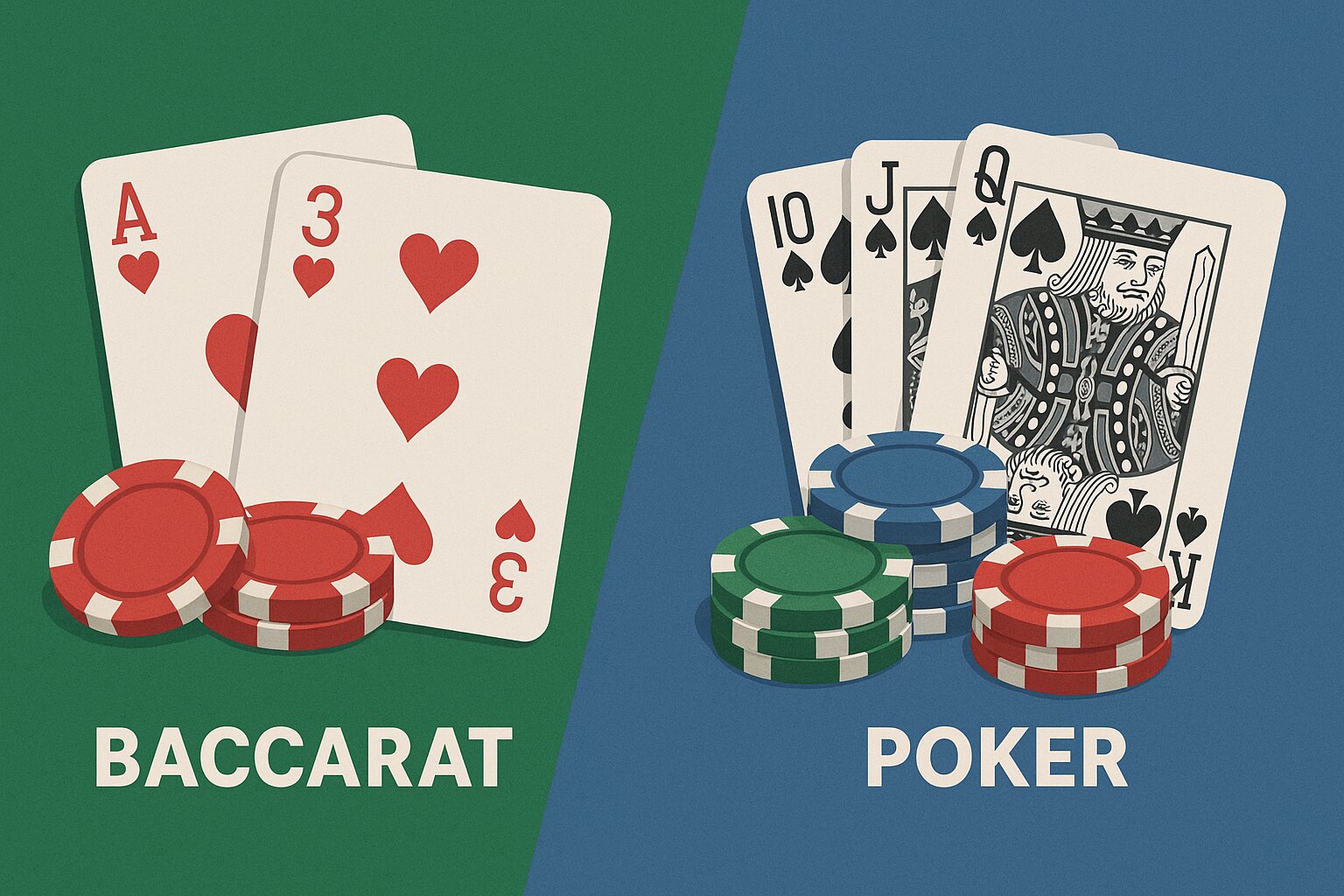
Choosing a card game at the casino can feel daunting, especially when two classics like baccarat and poker stand out on the menu. Both games are known for their suspense, skill elements and the social environment they create, yet they play out very differently once the cards are revealed.
This guide highlights the key similarities and differences between baccarat and poker so you can decide which suits your style. Whether you’re a curious beginner or a regular player looking for variety, a clearer picture of how each game works makes it easier to pick a table.
Read on as we break down gameplay, rules, social aspects and what to expect from each experience.
What Are Baccarat And Poker?
Baccarat is a comparatively simple card game where players place bets on one of a few outcomes: the player hand, the banker hand or a tie. The objective is to predict which hand will come closest to a total of nine. After bets are placed, the dealing and resolution follow fixed rules that leave little for players to change during a round.
Poker covers a family of card games with many popular variants, including Texas Hold’em and Omaha. The goal is to form the strongest hand or to make other players fold through betting. Poker blends random card distribution with strategic decision‑making, reading opponents and managing bet sizes over several rounds.
Both games use standard playing cards and are typically played at a table with multiple participants. Their pace, level of interaction and the decisions required from players are where they diverge most noticeably.
Key Similarities Between Baccarat And Poker
Baccarat and poker share several core features that explain their enduring popularity. Both centre on wagering, so placing chips to predict an outcome is essential in each game. They also create a social atmosphere, whether through quiet concentration in baccarat or banter and bluffing in poker.
Another common element is that neither game allows anyone to control the exact cards dealt; outcomes are shaped by chance and the structure of the game. Poker adds a stronger strategic layer because players can make choices that influence the flow of play, but both games require understanding the rules and how bets resolve.
Finally, both games are offered at a range of stakes, so players can find tables that suit their budget and preferences.
What Sets Baccarat And Poker Apart?
The most obvious difference is how much influence a player has during a hand. In baccarat, decisions are largely confined to the initial bet; after that the dealer follows predetermined rules to complete the round. This makes baccarat fast and predictable in structure.
Poker is interactive throughout each hand. Players decide whether to bet, raise, call or fold at several points, reacting to their cards, table position and opponents’ behaviour. Strategy, psychology and bankroll management play a much larger role in poker than in baccarat.
Betting mechanics themselves also differ. Baccarat uses a small set of fixed betting options with clear outcomes. Poker’s betting is dynamic, with multiple rounds and variable amounts that allow players to shape the pot and influence opponents’ choices.
Finally, the competitive focus changes: baccarat pits your bet against a set outcome or dealer position, while poker is a direct contest against other players at the table, where reading people and long‑term strategy are critical.
How Do Playing Styles And Objectives Differ?
The style and objective of each game shape the player experience. In baccarat, the primary activity is choosing where to place a wager and then observing how the cards are dealt. This can appeal to players who prefer a simpler, lower‑involvement session that still delivers moments of tension when cards are revealed.
Poker is about control and adaptation. Players work through a sequence of decisions, using knowledge of hand rankings, table position and opponents’ tendencies to try to sway outcomes. Success in poker comes from combining game theory, psychology and sound money management over many hands.
Both games can be social or solitary in tone depending on the table, but poker’s structure encourages interaction and longer sessions, while baccarat often moves quicker and attracts players who like clearer, more contained rounds.
Is Poker Or Baccarat Easier For Beginners?
Difficulty depends largely on what you want from a game. Baccarat’s rules are easier to pick up because there are fewer choices to make during play; learning how bets are resolved and the basic rules for drawing cards is often enough to join a table quickly.
Poker requires more time to learn well. Beginners must memorise hand rankings, understand the sequence of betting, and start developing reads on other players. That learning curve is part of poker’s appeal for people who enjoy strategy and steady improvement.
Ultimately, the choice comes down to whether you prefer an easier immediate start or a game that rewards study and practice. Either way, set a budget before you begin and choose stakes that match your comfort level.
Are There Common Myths About Baccarat And Poker?
There are a few persistent misconceptions about both games. One is that winning systems can guarantee success. No method removes the role of chance in individual rounds, and both games have built‑in mechanics that mean no strategy offers certainty.
Another is the belief that past results directly affect future outcomes. Each round or hand is independent, so outcomes should be treated on their own merits rather than as part of a predictable sequence.
In poker specifically, myths about “always bluff” or “never bluff” ignore the situational nature of the game. Effective play relies on adapting strategy to table dynamics and opponents, not following rigid rules.
If you’re evaluating strategies, focus on understanding odds, bankroll management and how decisions influence long‑term results rather than chasing quick fixes.
Which Game Offers A More Engaging Experience?
Engagement comes from what you enjoy doing at the table. If you like quick rounds with clear rules and limited decision points, baccarat can be satisfying. It’s straightforward, so attention tends to centre on the moment a hand is revealed.
If you prefer deeper interaction, ongoing decisions and the social angle of sizing bets and reading other players, poker generally provides more of that. Poker sessions often last longer and reward players who refine their approach over time.
Trying both in low‑stakes environments is the best way to see which feels more engaging. That first impression often guides whether someone prefers the steady rhythm of baccarat or the strategic ebb and flow of poker.
How To Choose Between Baccarat And Poker
Choosing between the two comes down to personal taste, how much effort you want to invest in learning and how you like to spend time at the table. Consider which aspects of play you find most enjoyable and how much time you want to devote to improving your skill set.
Look for tables that match your preferred stakes and atmosphere. Watching a few rounds or hands before joining can clarify which game feels more comfortable. Use available account and play tools to stay within limits you set for money and time.
If at any point you find your play is causing concern, support organisations exist to help; it’s sensible to seek guidance early rather than later.
If you’d like, explore our recommended low‑stakes tables and quick guides to hand rankings and betting terms to get started with confidence. This will help you decide whether baccarat’s simplicity or poker’s strategic depth suits you better.
**The information provided in this blog is intended for educational purposes and should not be construed as betting advice or a guarantee of success. Always gamble responsibly.