
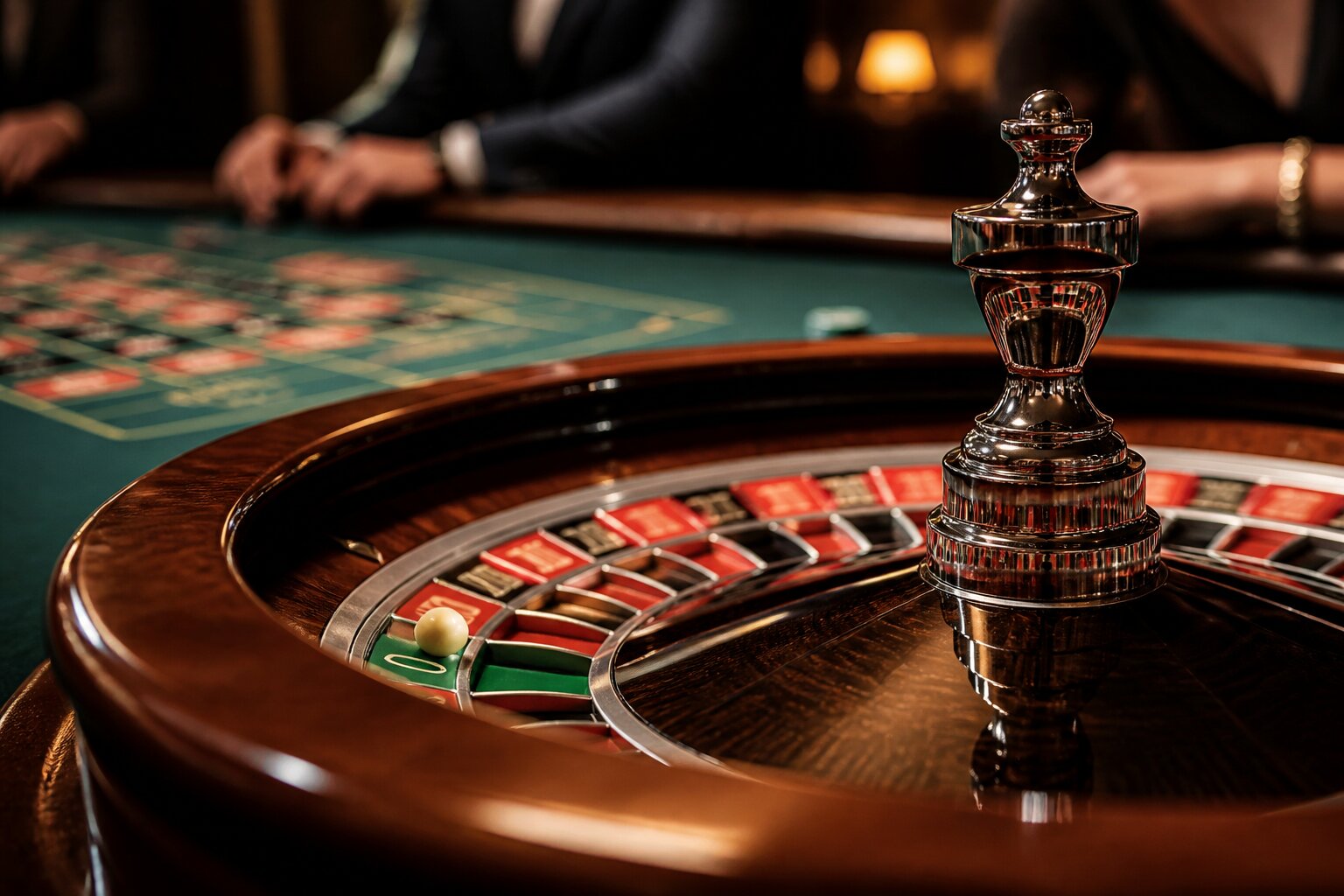
Roulette has always sparked excitement and plenty of questions. Among the dozen betting options, the single green zero often sits quietly, tempting players to try something different.
Most people stick to red or black, odd or even, or place chips on favourite numbers. But what about betting on zero — could it ever be the sensible choice, or is it simply another long-shot on the wheel? This guide walks through the role zero plays, the maths behind it, and the practical implications for your play.
Read on to separate myths from facts and to see whether zero deserves a place in your betting mix.
Understanding the Role of Zero in Roulette
The zero pocket is a defining feature of the roulette wheel. Introduced in 18th-century France, the green zero was added to give the house an edge over players, changing how even-money bets behave.
On European and French wheels there is a single green zero among 37 pockets: 36 red and black numbers plus the solitary green. American-style wheels include a second green pocket, marked 00, giving 38 pockets in total. Because zero is neither red nor black, nor odd nor even, it causes many common bets to lose when it appears.
French tables sometimes offer special rules such as la partage or en prison, which reduce the loss on even-money bets when zero lands by returning half the stake or holding it for the next spin. Those rules change the practical impact of zero for certain wagers and are worth checking when choosing where to play.
With that groundwork in place, next we’ll look at the actual odds involved when you place a bet on zero and how they compare to other options on the table.
Does Betting on Zero Really Change Your Odds?
A straight-up bet on zero has the same nominal chance of winning as a straight-up bet on any other single number. On a single-zero wheel that chance is 1 in 37, about 2.70%. On a double-zero wheel, each green pocket individually has a 1 in 38 chance, roughly 2.63%, and the combined chance of hitting either green pocket rises accordingly.
By contrast, outside bets such as red or black cover 18 of the total pockets. On a single-zero layout an outside bet wins 18 out of 37 spins (about 48.6%), and on a double-zero layout it wins 18 out of 38 spins (about 47.4%). The presence of zero or double zero therefore prevents these bets from being a true 50/50 proposition.
Payouts reflect those probabilities. A successful straight-up number pays 35 to 1, which is why it appears attractive for a single-chip win. The house edge remains unchanged by which number is chosen: around 2.7% on single-zero wheels and about 5.26% on double-zero wheels. These figures are baked into the game rather than being affected by betting patterns.
Understanding those percentages helps clarify whether backing zero changes your long-term standing at the table — and in the following section we’ll consider what actually happens at the table when zero lands.
What Happens When Zero Lands?
When the ball drops into the green zero pocket it changes the outcome for many common bets. A straight-up bet on zero will win big relative to the stake, but most outside and many inside bets lose on that spin because zero is excluded from red/black, odd/even, columns and dozens.
A straight-up zero payout is 35 to 1. For example, a £1 bet that lands on zero returns £36 in total — your £35 winnings plus your original £1 stake. Split bets that include zero pay 17 to 1, while other inside combinations involving zero pay in proportion to how many numbers they cover.
Zero’s effect on other bets is straightforward:
- Outside bets such as red, black, odd, even, high and low lose on a zero result because zero isn’t part of those groups.
- Column and dozen bets also fail to win when zero appears.
- If la partage or en prison rules are in effect at a table, the loss on even-money bets may be reduced or deferred, which slightly improves those bets’ practical odds.
- Inside bets that do not include zero lose in the same way as outside bets.
Knowing how zero interacts with different wagers is useful when weighing whether to include it in a betting spread. Next, we’ll examine how single-zero and double-zero layouts differ and why that matters for choice of wheel.
Single Zero Versus Double Zero: Why Does It Matter?
The difference between a single-zero and a double-zero wheel is small in appearance but meaningful in numbers. A single-zero wheel has 37 pockets; a double-zero wheel has 38. That single extra green pocket shifts the probabilities and expands the house edge.
On a single-zero wheel the house edge is about 2.7%. Adding a double zero raises that edge to roughly 5.26% on American-style wheels. The payout for a straight-up zero remains 35 to 1, but the expectation behind that payout is lower on a double-zero wheel because there are more pockets to cover.
For players concerned with maximising the statistical return per spin, choosing a single-zero layout is the better option. However, both formats have identical payout structures for winning bets, and neither can be “beaten” by a betting system. The next section looks at whether any timing or strategy makes betting on zero more sensible.
Is There a Right Time to Back Zero?
Some players include zero in coverage strategies or betting systems, while others place chips on it occasionally as part of a broader spread. Statistically, zero is no more or less likely to appear at any given moment than any other single number; each spin is an independent event governed by random outcomes.
Systems such as Martingale are sometimes applied to even-money bets and can be adapted to other wagers, but they do not change the underlying probabilities. Because zero has a low probability of occurrence, attempting to target it with progressive staking can quickly increase risk and the size of bets required after a run of losses.
Other approaches involve spreading chips to cover clusters of numbers that include zero or simply treating zero as one option among many in a balanced bet layout. These choices are primarily tactical: they change the pattern of wins and losses, not the long-term mathematical edge.
If including zero in a betting plan helps a player feel organised or focused, it can have value for that reason alone. With probabilities understood, the focus remains on managing exposure rather than expecting any predictable timing for zero, and the next section addresses several persistent myths about the green pocket.
Dispelling Common Myths About the Zero Bet
A frequent myth is that zero is “due” after a run of other colours or numbers. Because each spin is independent, previous results do not alter the probability of future outcomes. The odds for zero are fixed by the wheel layout, not by prior sequences.
Another misconception is that zero offers an inherently better return than other single numbers. While the payout for any straight-up number is the same, that does not make zero a superior choice; it simply reflects the low frequency with which any single number will be hit.
Some believe experienced players can detect wheel bias to predict zero. Modern roulette wheels in casinos are tested and maintained to prevent mechanical bias, and online games use random number systems that are independently audited, so reliable patterns of that sort are extremely unlikely.
Finally, chasing losses or assuming a large win is imminent increases financial risk. Decisions at the wheel should be framed by sensible limits and an understanding of the probabilities involved, with play kept as entertainment rather than a method to recover funds.
Bet responsibly, set clear limits before you play, and view any win on zero as an occasional high payout within a game that favours the house over time. This perspective helps keep your sessions measured and enjoyable.
Play Casino Games Online at Dove Casino
We’re delighted to welcome you to our site, where you can experience the enjoyment of casino games in a friendly and safe online setting. Join us to explore a world of entertainment made for everyone.
**The information provided in this blog is intended for educational purposes and should not be construed as betting advice or a guarantee of success. Always gamble responsibly.