
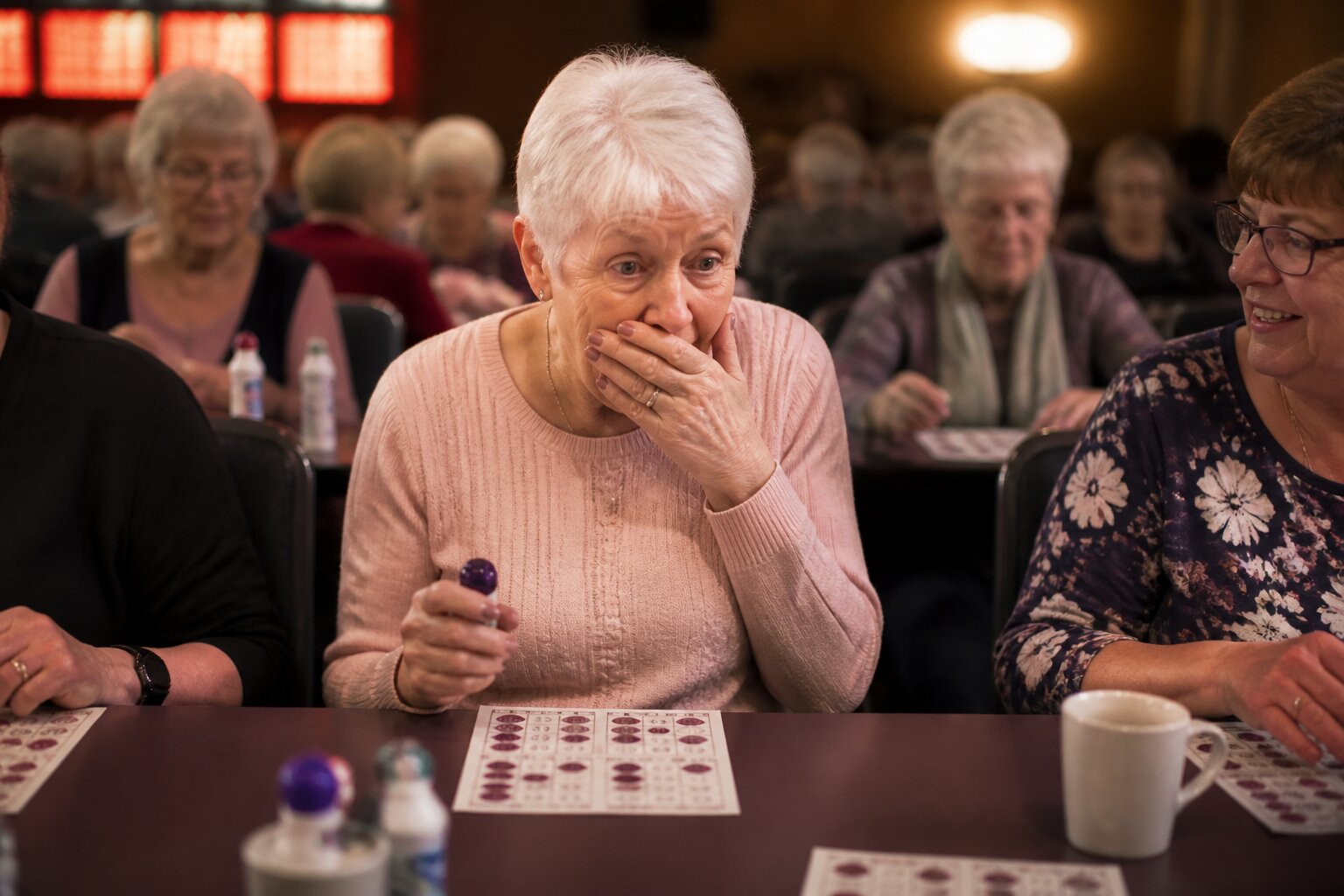
Ever wondered how quickly someone can call out “Bingo!”? Some players talk about the ultimate feat—completing a full ticket after only 15 numbers are called. But is that actually possible, or merely part of bingo folklore?
This post looks at what a 15-number Full House would mean, how the maths behind it works, and how often it truly happens in practice. Read on to understand the real odds and what they tell us about those headline-making quick wins.
What Does Winning Bingo in 15 Numbers Mean?
In standard 90-ball UK bingo, a ticket contains 15 numbers arranged across three rows. A Full House means every number on the ticket has been marked off.
Winning in 15 numbers means the first 15 balls drawn are exactly the 15 numbers on your ticket, in any order. With each call you would mark a number and, on the fifteenth draw, call “Full House.” That is the absolute minimum number of calls required to complete a full ticket.
This outcome demands that every single drawn number matches a number on your ticket; there can be no blank calls for you between draws. Because of that strict requirement, a 15-number Full House is the fastest possible win in 90-ball bingo and also extremely uncommon.
How Rare Is Winning Bingo in 15 Numbers?
A 15-number Full House is extraordinarily rare. The reason is straightforward: there is only one exact set of 15 numbers on your ticket out of all the possible sets that could be drawn from 90 balls. The probability that the first 15 balls match your ticket exactly is therefore very small.
You can express the exact chance as 1 divided by the number of ways to choose 15 balls from 90, which is written mathematically as 1 / C(90,15). That combination count is a very large number, so the overall probability is correspondingly tiny. In practical terms, most games will require many more calls before someone completes a Full House, which is why a 15-number finish is so notable when it happens.
To put this in context: while rapid wins do occur from time to time, they are exceptional. Expecting a 15-number outcome in ordinary play is unrealistic because of how the mathematics of combinations works.
Calculating the Odds of a 15-Number Win
The exact odds rest on basic combinatorics. Each bingo draw is a random selection without replacement, and the chance that the first 15 drawn correspond exactly to your ticket equals one divided by the number of distinct 15-number combinations possible from 90 balls.
That number of combinations—C(90,15)—is computed using factorials, and it grows very quickly as the numbers increase. Because every possible ordering of the first 15 balls corresponds to one of these combinations, the probability for any single ticket to be a 15-call Full House is 1/C(90,15). No method of play, seating choice or routine changes this mathematical fact.
The important takeaway is that the odds are determined purely by the number of possible combinations; nothing in the game mechanics or player behaviour alters that baseline probability.
How Are Bingo Odds Determined?
Odds are derived by counting how many different sets of numbers could be drawn and comparing that to the single set that matches your ticket. In practice, organisers and statisticians use that same combinatorial approach to estimate how often a Full House will occur at different stages of a game, and to design special promotions or jackpot conditions accordingly.
Because the calculation is straightforward, it’s easy for operators to explain how rare a given fast-win prize would be if they choose to offer one. That transparency helps players understand why rapid-win jackpots are unusual and often subject to specific terms.
Is It Possible to Guarantee a Win in 15 Numbers?
There is no way to guarantee a 15-number Full House. The draw process is arranged so that no participant can influence which balls come out or their order. Variables such as how many tickets are sold, or which game format is used, do not change the underlying probability for any single ticket when it comes to a 15-call finish.
Buying multiple tickets increases the number of your own entries in a game, and therefore raises the chance that one of those tickets matches the drawn numbers. However, even buying many tickets does not provide any guarantee; it only changes the proportion of tickets you hold relative to the total sold, while each specific 15-number combination remains just one possibility among the many.
Organisers maintain procedures to ensure fair draws and avoid duplicates of tickets that would otherwise distort outcomes. Those safeguards are part of what keeps the odds stable and verifiable.
Does Game Type Affect Your Chances?
Different bingo variants (75-ball, 80-ball, or others) change the structure of tickets and the patterns required to win, so their probabilities for particular quick wins are different. The general principle remains the same: the fewer balls and the fewer numbers needed for a particular win pattern, the higher the relative probability of finishing quickly.
In 90-ball games, the 15-number Full House is specifically constrained by the ticket design and the need to match all 15 numbers. In other formats, a “fast” full or pattern might be defined differently and have its own rarity. Comparing across game types requires looking at the rules and the number of combinations for that format rather than assuming the same odds carry over.
If you move between formats, it’s worth noting that fast wins feel more or less likely depending on the ticket layout and the number pool, but no format removes the role of random draws in determining outcomes.
Are There Any Famous Cases of Quick Bingo Wins?
There have been occasional reports of unusually fast Full Houses, and those stories often get picked up because they are so uncommon. Quick wins can occur in any format, and when they do they tend to become memorable anecdotes within a hall or on social channels.
Such cases are interesting from a human point of view, but they don’t indicate a pattern that players can follow; they are statistical outliers. Organisers who advertise special rapid-win jackpots will normally make clear how rare those outcomes are and what conditions apply. When a headline about a fast win appears, it’s usually because the event is exceptional rather than typical.
Common Myths About Fast Bingo Wins
A persistent myth is that certain tickets, seats, or rituals can improve the odds of a rapid win. In truth, the draw process prevents any influence of that kind: every ticket’s chance of matching a specific set of drawn numbers is governed by the same combinatorial rules.
Another misconception is that quick wins are fairly common or repeatable. While it’s possible to win in very few calls on occasion, those events are rare and should not shape expectations about how often they will happen. The maths behind combinations makes repeated occurrences unlikely within any normal timeframe of play.
Understanding these points helps keep excitement in perspective and makes it easier to appreciate a rare fast win when it does occur, without mistaking it for proof of a repeatable method.
What Should Players Know About Fast Bingo Prizes?
Prize structures are set out before a game and generally depend on ticket sales, fixed prize pools, or specific promotional rules. A fast win does not automatically attract a larger prize unless the game’s rules explicitly state a bonus or jackpot for winning within a given number of calls.
Occasionally, a game will advertise a separate prize for a Full House within a certain number of draws. Those offers are normally accompanied by clear terms and conditions so players know exactly what to expect. Otherwise, the timing of a Full House simply determines when the win occurs, not the size of the standard prize.
It’s important to read the rules for any special prize promotions so you understand the eligibility criteria and payout limits.
Summary: What Are the Real Chances of Winning Bingo in 15 Numbers?
A Full House in just 15 calls is the fastest possible outcome in 90-ball bingo, but it is extremely unlikely. The precise probability for any single ticket is 1/C(90,15), which reflects the vast number of possible 15-number combinations from a 90-ball pool. That mathematical reality is what makes such wins headline-worthy when they happen.
Some games may offer dedicated jackpots for rapid wins, but these are the exception and will always come with explicit rules and limits. For most players, bingo is best enjoyed for the social experience and the excitement of play rather than the expectation of seeing a 15-number finish.
If you play, do so within your means and in a way that fits your personal budget.
**The information provided in this blog is intended for educational purposes and should not be construed as betting advice or a guarantee of success. Always gamble responsibly.