
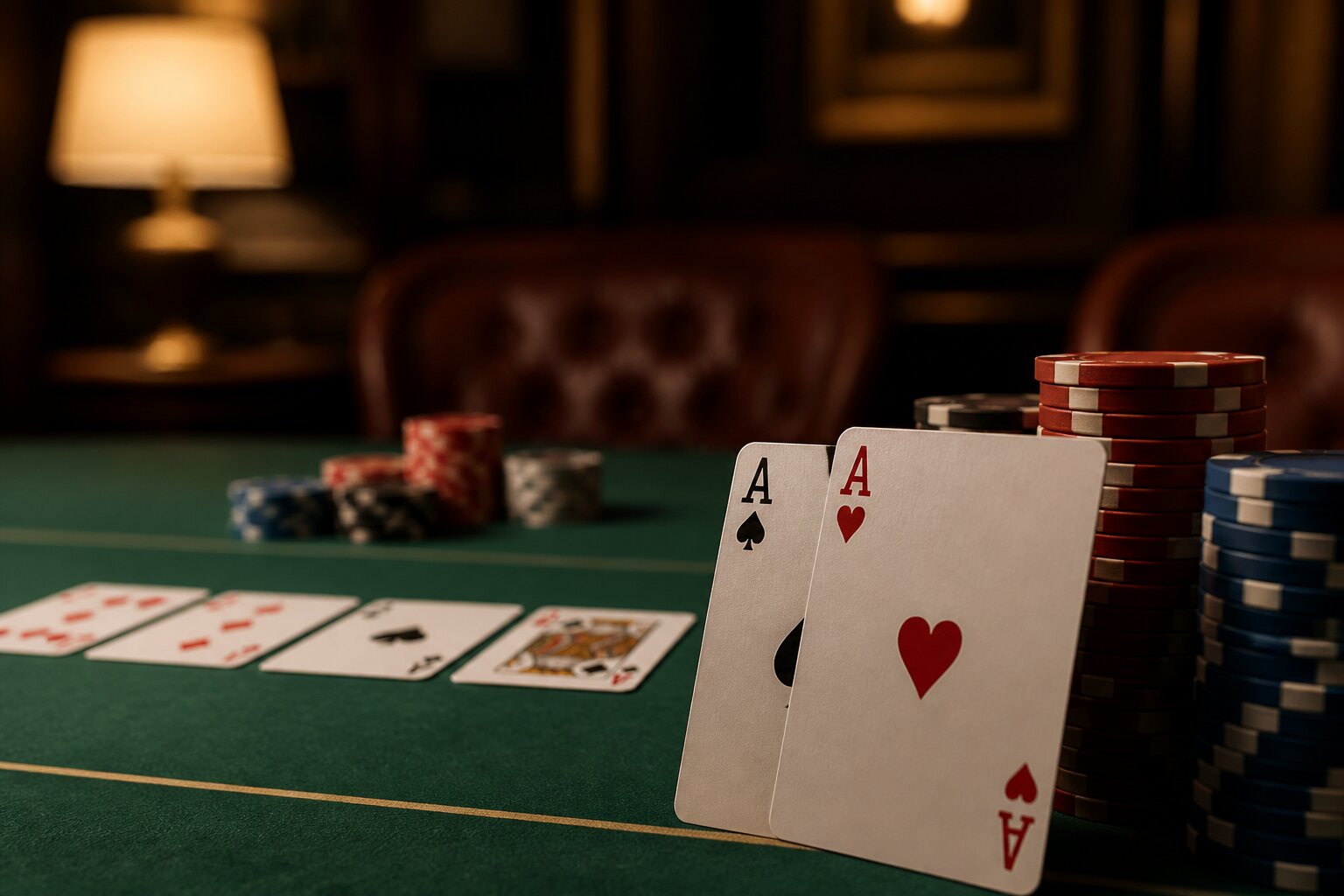
If you've ever heard someone call a pair of Aces "Pocket Rockets", this guide will bring that nickname to life. Whether you’re new to poker or you’ve played before, knowing what Pocket Rockets represent and how they behave in a hand helps you read the table and make better choices.
We’ll cover what Pocket Rockets are, how often they appear, how they stack up against other starting hands and how to think about them during play. Read on and you’ll get a clearer picture of why two Aces command so much attention at the table.
What Does Pocket Rockets Mean In Poker?
Pocket Rockets is a colloquial term for being dealt two Aces as your starting hand in Texas Hold’em. In practical terms, you start the round with a pair — two cards that are the highest rank in the deck. The name is simply a colourful way players refer to that pair.
Knowing nicknames like this helps you follow conversations at the table and understand betting patterns. It also signals to opponents that you recognise common poker language, which can subtly influence how others engage with you.
Even though Pocket Rockets are powerful at the outset, they are one element among many in a hand. How the betting unfolds and which community cards appear will determine the final outcome.
Why Are Pocket Rockets So Powerful?
The core reason Pocket Rockets are strong is simple: they are the top starting pair. Beginning with two Aces gives you the highest possible pair before any community cards are revealed, which translates into the strongest baseline equity against random hands.
Statistically, pocket Aces outperform other starting hands in head-to-head comparisons. That edge makes them the most favourable hand to begin the round with, and it often justifies more assertive betting early on to build value.
Still, their power is contextual. The strength of Pocket Rockets can be eroded by coordinated community cards that enable straights, flushes or higher pairs for opponents. Assessing the table, stack sizes and players’ tendencies remains essential.
What Are The Odds Of Being Dealt Pocket Rockets?
Pocket Rockets are rare. In Texas Hold’em, the probability of being dealt two Aces as your hole cards is about 1 in 221, or roughly 0.45%. In combinatorial terms there are 1,326 distinct two-card starting hands and only six combinations produce a pair of Aces, which is why the frequency is so low.
This low frequency explains why players react strongly when they see the hand. It simply does not appear often, and that scarcity can influence how you choose to size bets and manage the pot. Encounters with Pocket Rockets are notable events rather than routine occurrences, so they often invite more attention and potentially larger pot-building action.
Keep in mind that this is a starting-hand probability only. What happens on the following streets will change the hand’s winning chances as the board develops:
- Flop: three community cards are revealed and can improve or weaken your relative position.
- Turn: a fourth card can create new draws or complete existing ones.
- River: the final card determines the ultimate strength of your hand and the showdown outcome.
All percentages and strategic implications refer to probabilities before any community cards are seen, and actual outcomes depend on the specific runout and player actions.
How Do Pocket Rockets Rank Among All Poker Hands?
Pocket Rockets occupy the top position among starting hands in Texas Hold’em. Before any community cards are exposed, no other two-card combination has a higher expected chance of winning against random opposition.
When comparing Pocket Rockets to other premium hands, such as pocket Kings or Ace-King suited, the Aces maintain a statistical advantage. For instance, in many heads-up matchups pocket Aces will be heavily favoured against single pairs or high-card combinations.
That said, these rankings reflect pre-flop strength only. As later cards appear, hand rankings and probabilities shift. Keeping an eye on the evolving board texture helps you decide whether to protect, extract value or proceed cautiously.
Pocket Rockets Versus Other Premium Hands
To put the comparisons into context, pocket Kings and pocket Queens trail pocket Aces in raw pre-flop equity. Hands like Ace-King suited offer strong post-flop playability, but they start with less inherent power than two Aces. Pocket Jacks and lower pairs are still competitive, yet they are routinely dominated by Pocket Rockets from the outset.
Understanding these relative strengths helps you interpret opponents’ likely holdings and craft bets that reflect both your hand and the information available from the table.
Are There Common Myths About Pocket Rockets?
Several persistent myths circulate around Pocket Rockets. One is the belief they will always prevail; while they start with the best chance, the eventual outcome depends on the full run of cards and on opponents’ plays.
Another misconception is that Pocket Rockets should always be played extremely aggressively, regardless of context. Overcommitting without reading the table can be costly—especially when the board shows coordinated cards that favour multiple opponents.
Some players assume two Aces allow for looser decisions later in the hand. In practice, tight decision-making often remains the best course: assessing pot odds, board texture and player behaviour gives a clearer picture than relying solely on the starting hand.
How Should You Play Pocket Rockets Pre-Flop?
Pre-flop, Pocket Rockets typically merit raising to build the pot and narrow the field. A well-sized raise increases the chance of finishing ahead by reducing the number of opponents who can catch draws on later streets.
The exact sizing and style of play depend on table dynamics. Against cautious players a smaller raise can achieve the same effect as a larger one at an aggressive table, where re-raises are more likely and deeper stacks change the implications of each bet.
Rather than following a rigid formula, consider how much information you have about opponents and adjust your approach so your betting achieves a balance between protecting the hand and extracting value.
What To Know When Pocket Rockets Lose?
Losing with Pocket Rockets is part of the game rather than an aberration. Certain board runouts can produce straights, flushes or sets for opponents that overcome a pair of Aces, especially when multiple players are involved. Variance means even the best starting hand will not win every time.
When a loss occurs, the useful response is analytical. Review how the pot developed and how the action unfolded. Consider whether your sizing allowed drawing hands to see the turn or river cheaply, and whether your position or bet cadence gave opponents too much information. Look at how opponents’ actions signalled their holdings, which can help you identify bluffs or disguised strength.
These observations refine your future choices. Pay particular attention to:
- pot control and whether you could have reduced the amount at risk
- bet sizing that invited cheap draws
- position and how it affected your ability to protect the hand
- stack sizes and how they influenced commitment decisions
Keeping perspective after a loss preserves good decision-making for subsequent hands and prevents a single result from skewing your strategy. Manage tilt by taking a short break if needed, and remind yourself that poker is a long-run game where correct processes matter more than any single outcome.
Summary: Key Facts About Pocket Rockets
To wrap up, here are the essential points to keep in mind about Pocket Rockets and how they influence play.
The Basics
Pocket Rockets is the nickname for starting with two Aces.
They are the strongest starting hand in Texas Hold’em.
The odds of being dealt Pocket Rockets are about 1 in 221.
What This Means for Play
Beginning with Pocket Rockets gives you the best pre-flop position, but board development and opponent behaviour determine the final outcome.
Effective play balances aggression to build value with awareness of changing board textures and player tendencies.
Responsible Gaming Reminder
Always play within your limits and prioritise control over stakes. If gambling stops being enjoyable or becomes problematic, consider seeking support from appropriate services. Poker should remain an entertaining pastime rather than a source of stress.
**The information provided in this blog is intended for educational purposes and should not be construed as betting advice or a guarantee of success. Always gamble responsibly.