
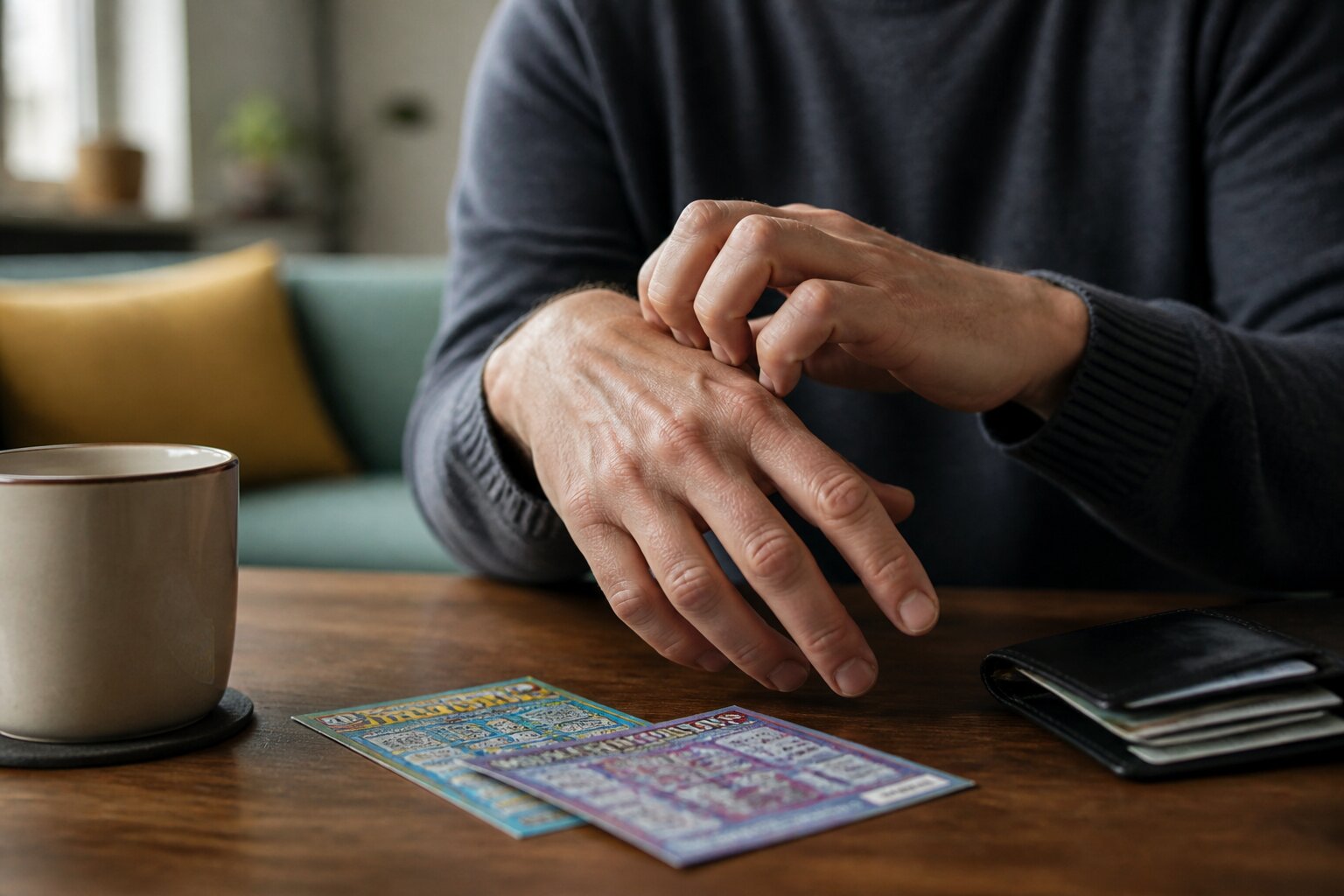
Have you ever felt your right hand itch and wondered whether it might mean you’re about to receive money? For many who play the lottery, such signals are part of a long tradition of interpreting bodily sensations as signs of what might happen next.
This article examines where the itchy right hand belief comes from, what science and experts say, how it influences behaviour, and what sensible attitudes to take when playing the lottery. Read on to separate folklore from fact and to see how these ideas fit into the wider world of chance-based games.
Does an Itchy Right Hand Mean Money Is Coming?
A widespread folk belief holds that an itchy right hand signals incoming money. In practice, however, there is no evidence that sensations in the body can predict financial gain. Lottery draws and other forms of regulated gambling use processes and systems designed to produce unpredictable outcomes, so physical sensations cannot change the probabilities involved.
People who experience an itchy hand and then buy a ticket may later have a win, but that sequence of events is a coincidence rather than proof of causation. Understanding this helps keep expectations realistic when deciding whether to take part in a draw. Next, we’ll look at how this idea came to be so common.
Origins of the Right Hand Itching Money Superstition
The notion that the right hand brings money and the left takes it away has been recorded across parts of Europe for centuries. In some local traditions, the right hand was associated with receiving and gain, while the left was linked to parting with belongings or paying out. These simple associations were folded into everyday speech and oral storytelling, so sensations such as an itchy hand became interpreted as omens.
Such beliefs spread and adapted, carried along by markets, fairs and the social spaces where people gathered to play games and trade stories. Over time, they found a ready audience among those who took part in lotteries and draws, where any perceived sign that preceded a small win would be remembered and retold.
These cultural roots explain why the superstition persists, though the next section explains why the feeling itself has a different, natural explanation.
Is There Any Scientific Basis for Right Hand Itching and Money?
Medical and physiological explanations account for most instances of itching. Dry skin, contact dermatitis, allergic reactions, insect bites, or irritation from everyday products are common causes. Neurological conditions can also produce sensations in certain areas of the body. None of these causes have any relationship with financial events or the outcome of chance-based draws.
Psychology helps explain why the superstition feels convincing. Humans tend to notice and remember patterns that confirm expectations, a tendency known as confirmation bias. If an itchy hand precedes a purchase and that purchase results in a small prize, the sequence is more memorable than the far more frequent times when an itchy hand leads to nothing notable. Together, these physiological and cognitive explanations account for the phenomenon without invoking any predictive power. With that context, it becomes clearer how the idea influences behaviour around gambling.
How Has the Right Hand Itching Belief Influenced Lottery Players?
For some players, the itchy-hand idea becomes part of their personal ritual or decision-making around buying tickets. People may feel more inclined to play on days when they notice the sensation, or they may treat such moments as a prompt to try a new game. These behaviours are a mixture of habit, superstition and the desire for a positive experience.
The belief also fuels stories and social sharing. Anecdotes about an itch followed by a small win travel easily in conversations and online forums because they are short, easy to retell, and emotionally satisfying. Those narratives help to normalise the superstition within communities of players, reinforcing the idea that these signals matter even though they do not affect the underlying probability of a draw.
Understanding this social and psychological backdrop makes it easier to see how myths take hold, which leads naturally into how experts view these kinds of beliefs.
Right Hand Itching Myths: What Do Experts Say?
Researchers in psychology and gambling studies treat the itchy right hand superstition as an example of how people impose meaning on random events. Experts point out that rituals and beliefs can provide a sense of control or comfort, but they do not change objective outcomes in games that are governed by chance and regulated procedures.
From the perspective of consumer protection and fair play, lotteries use audited draw machines and random number generation to ensure every ticket has the same statistical odds. Professionals advise that rituals should not dictate spending decisions, because relying on them can create unrealistic expectations and unhelpful patterns of behaviour. A measured approach to participation helps keep play predictable and within personal limits. The next section explores whether those attitudes should affect how individuals treat superstitions when deciding to play.
Should You Trust Superstitions When Playing the Lottery?
Superstitions like an itchy right hand offer a narrative that can make play feel more meaningful, but they do not alter outcomes. Treating such signals as decisive guidance can encourage people to spend more than intended or to expect particular results from future draws.
A healthier stance is to see these beliefs as part of the cultural texture around gambling rather than as tools for decision-making. That viewpoint supports clear expectations about the nature of the lottery: outcomes are determined by chance, and purchases should be made with enjoyment and budget in mind rather than in the belief that a bodily sensation predicts a prize. With that perspective in place, you can appreciate the folklore without letting it shape your spending.
Key Takeaways for Lottery Players and the Right Hand Itching Myth
The idea that an itchy right hand predicts incoming money is a long-standing piece of folklore with cultural and social roots. Scientific and psychological explanations point to ordinary skin conditions and cognitive biases rather than any predictive power over financial events. For people who play the lottery, the belief can be an entertaining part of the experience but should not influence how much is spent or how often games are played.
If you choose to buy tickets, view it as a form of entertainment and set clear limits in advance. You must be 18 or older to take part in any UK lottery. If gambling ever stops being enjoyable or starts to cause stress, confidential help is available from organisations such as BeGambleAware and GamCare. Overall, enjoy the traditions and stories, but let evidence and sensible budgeting guide your decisions.
**The information provided in this blog is intended for educational purposes and should not be construed as betting advice or a guarantee of success. Always gamble responsibly.