
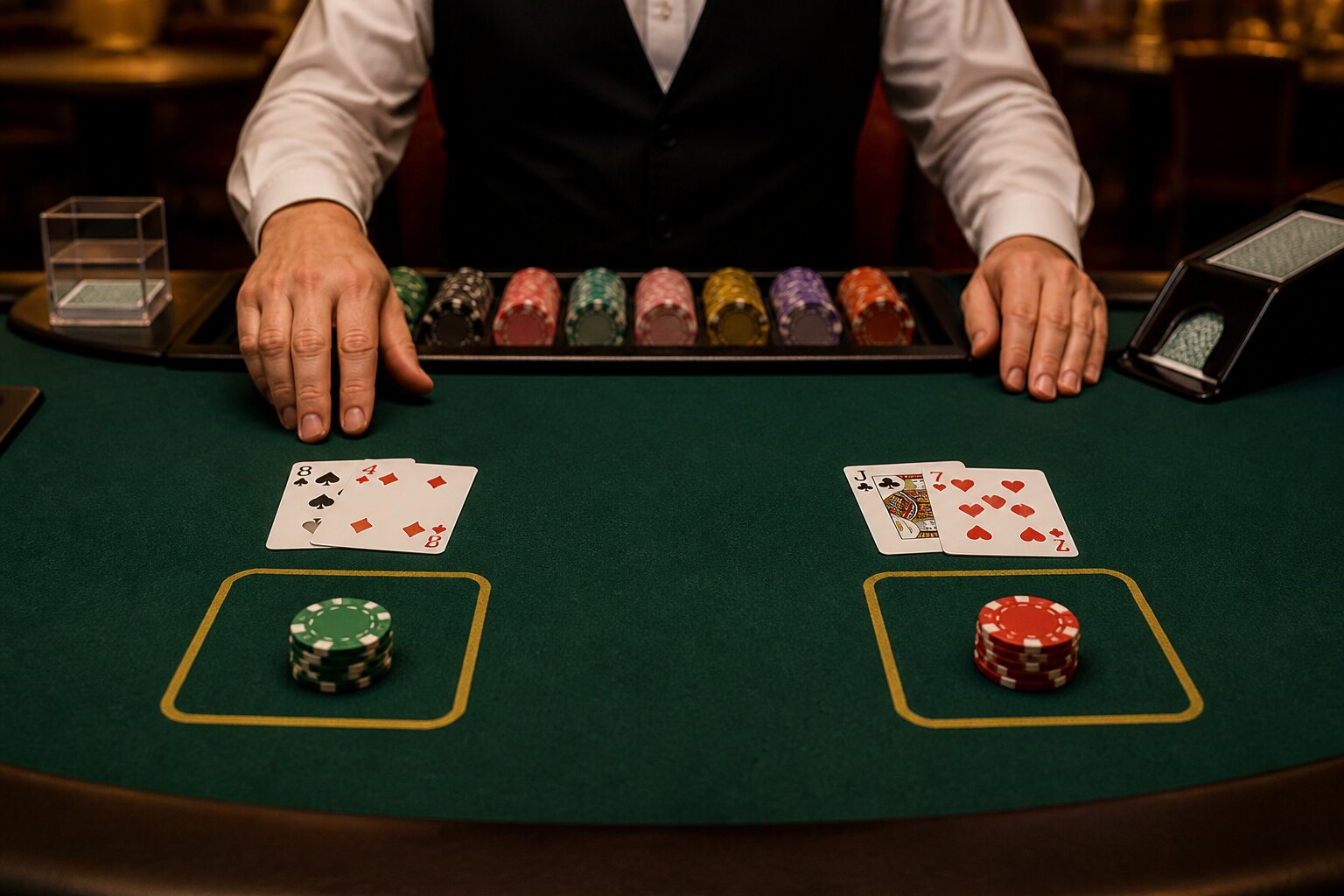
Have you ever found yourself at the blackjack table wondering whether to stick with one hand or try playing two at once? It’s a common decision for both new players and regulars.
Some prefer the steady focus of a single hand, while others enjoy the extra activity that comes with two. There’s no single correct choice — just different ways to play that suit different tastes and budgets.
In this article we’ll look at the practical differences between one and two hands, the trade-offs to consider, and some tips to help you decide what works best for you.
What Does Playing Multiple Blackjack Hands Mean?
Playing multiple blackjack hands means you place more than one bet in the same round and receive separate sets of cards for each bet. Each hand is played independently: you make choices for each one and settle them individually against the dealer.
This option is commonly available at many tables and online games, though some games or tables may limit how many hands you can take. Each extra hand increases the amount you have at stake in that round, so it changes how quickly your balance moves up or down.
If this idea is new, think of it as running parallel games at the same time: you follow the same rules for each hand, but you’ll be making twice the number of decisions when you play two hands.
Transitioning from the basics, the next sections compare the practical advantages of sticking with a single hand versus taking two.
Pros of Playing One Blackjack Hand
Playing just one hand keeps the game simple and easy to manage. With only one set of cards to read, decisions come more slowly and more thoughtfully, which helps reduce errors and gives you time to consider each option.
Financially, one hand means a single bet per round, so your bankroll is easier to control. That can make sessions last longer and reduce the temptation to raise stakes to recover losses. It also makes it simpler to set and stick to limits, which supports responsible play.
A single hand allows time to concentrate on playing well and learning strategy without juggling multiple scenarios. For players who prefer a measured pace and clearer focus, one hand often provides a more comfortable experience.
Other benefits include:
- Fewer distractions, so you can pay closer attention to the dealer and the flow of the game.
- Easier tracking of wins and losses, which helps with assessing how your strategy is working.
- A calmer social environment at the table, which can be preferable for newer players or those who like a steady rhythm.
Overall, playing one hand suits anyone looking for a controlled, focused way to enjoy blackjack while managing time and money more predictably.
Pros of Playing Two Blackjack Hands
Taking two hands brings more activity to each round. You’re involved in twice as many outcomes, which creates a livelier rhythm and more tactical choices to weigh.
Playing two hands lets you vary your approach within the same round. For example, you might adopt a conservative line on one hand while experimenting with a different decision on the other, which can be useful for learning how different plays play out in real time.
Because you encounter more resolved hands per hour, some players find this style more engaging and better suited to a faster session. Bear in mind that with that extra engagement comes extra exposure: every additional hand increases the total amount you have at risk.
Cons to Consider: One vs Two Blackjack Hands
Both approaches have downsides that matter in different ways depending on your goals, experience and budget. The right option depends on how you prefer to manage your time at the table and how quickly you want your bankroll to be affected.
Impact on Your Bankroll
Playing two hands requires two bets each round, which accelerates how quickly money moves in or out of your balance. This means losing streaks can eat into your funds at a faster rate and winning streaks must cover a larger outlay to be net positive.
Even short sessions can use up funds faster when multiple bets are placed simultaneously, so it’s sensible to align stake sizes with how many hands you plan to play. Setting limits beforehand and sticking to them helps preserve control and reduces the chance of overspending.
With a single hand, bankroll swings tend to be smaller and more gradual, which helps maintain control over a longer session. That slower pace can make it easier to manage loss limits, session length and overall bankroll strategy.
Speed of Play and Focus
Two hands speed up decision-making and increase mental load. You will need to split attention between separate scenarios, keep track of more cards and make quicker calls, which can lead to mistakes if you are distracted or fatigued.
Playing two hands also reduces the time between decisions on each hand, so you may feel pressured to act before fully analysing the situation. This can erode the quality of your choices, particularly for less experienced players.
By contrast, a single hand lets you step through each round more deliberately. If you prefer to think through each decision without pressure, one hand may suit you better. Slower play can also improve discipline and make it easier to follow a basic strategy or a specific betting plan.
Transition: Having weighed practical pros and cons, you might wonder whether playing more hands affects the fundamental odds of the game.
Does Playing More Hands Improve Your Odds?
Playing additional hands does not change the underlying house advantage or your expected return per bet. Each hand is resolved according to the same rules and mathematical edge, so the number of hands you play does not alter the basic odds.
What does change is variance: playing more hands increases the number of outcomes you experience in a given time, which makes short-term swings larger. That can make a session feel more volatile even though the long-term expectation per bet remains unchanged.
Understanding that distinction between odds and variance helps clarify why choosing a number of hands is primarily a matter of style and bankroll management, not a way to improve results.
Common Myths About Playing Multiple Blackjack Hands
A few persistent ideas can mislead players deciding how many hands to play. One is the belief that more hands increase your overall chance of winning; as noted above, each hand has the same expected outcome, so this isn’t true.
Another misconception is that playing several hands can recover past losses faster. Because each hand is independent, increasing the number of bets simply raises exposure without improving the likelihood of reversing earlier outcomes. Chasing losses by placing more bets usually makes monetary swings larger, not smaller.
Some also think that managing multiple hands automatically demands greater skill and therefore produces better results. While experience helps with simultaneous decisions, it does not eliminate the game’s statistical structure — outcomes still follow the same probabilities.
These clarifications should make it easier to choose based on what you enjoy and how you manage risk, rather than on unfounded expectations.
Tips for Deciding How Many Hands to Play
Decisions on hand count hinge on a few practical considerations. First, match stake sizes to the number of hands so total exposure fits your comfort zone. Players who prefer longer sessions with smaller swings often favour one hand, while those wanting more action within a shorter time might prefer two.
Experience is another factor. Newer players tend to benefit from the clearer rhythm of a single hand, whereas people with more familiarity may handle two hands comfortably. Try changing your approach across sessions to see what feels best; alternating styles is a good way to learn without committing immediately.
If you want tools to control spending, use the site’s deposit, loss or session limit features. These can help keep play within set boundaries and are useful whether you choose one hand or multiple.
Transition: Once you’ve considered those practical points, the final comparison helps bring the decision into focus.
Which Is Best: One or Two Hands in Blackjack?
There is no universally best choice — it depends on your aims and how you prefer to play. One hand suits players who favour clarity, steadier bankroll management and a slower pace. It can make it easier to follow basic strategy and to keep decisions straightforward.
Two hands suit those who prefer a busier session, more decisions per hour, and the chance to try different lines inside one round. Playing two hands increases the number of decisions you must make at once and can lead to greater short-term bankroll fluctuation, so it is best suited to players who are comfortable with that added complexity.
Think about the following factors and let them guide your choice rather than any expectation of changing your odds:
- How intensely you want to be involved during each round.
- How quickly you want your bankroll to change or how much variance you can tolerate.
- How comfortable you are making simultaneous decisions and managing two hands at once.
- Practical considerations such as table pace, dealer speed and any house rules that might affect splits, doubles or insurance.
If you are unsure, try both approaches in low-stakes play to see which feels more enjoyable and manageable. Above all, play in a way that you find enjoyable and sustainable, and stick to limits you set for yourself.
Final Thoughts on Choosing the Right Approach
Whichever approach you pick, the key is that it fits your preferences and finances. Try both styles in low-stakes situations to see which feels more natural, and adjust based on how each session unfolds.
Keeping It Safe and Fun
Blackjack should remain an enjoyable activity. Use available tools to set limits and take breaks if you need them. If you want guidance or support, the site’s safer play resources are there to help you stay in control and keep the experience positive for as long as you choose to play.
**The information provided in this blog is intended for educational purposes and should not be construed as betting advice or a guarantee of success. Always gamble responsibly.