
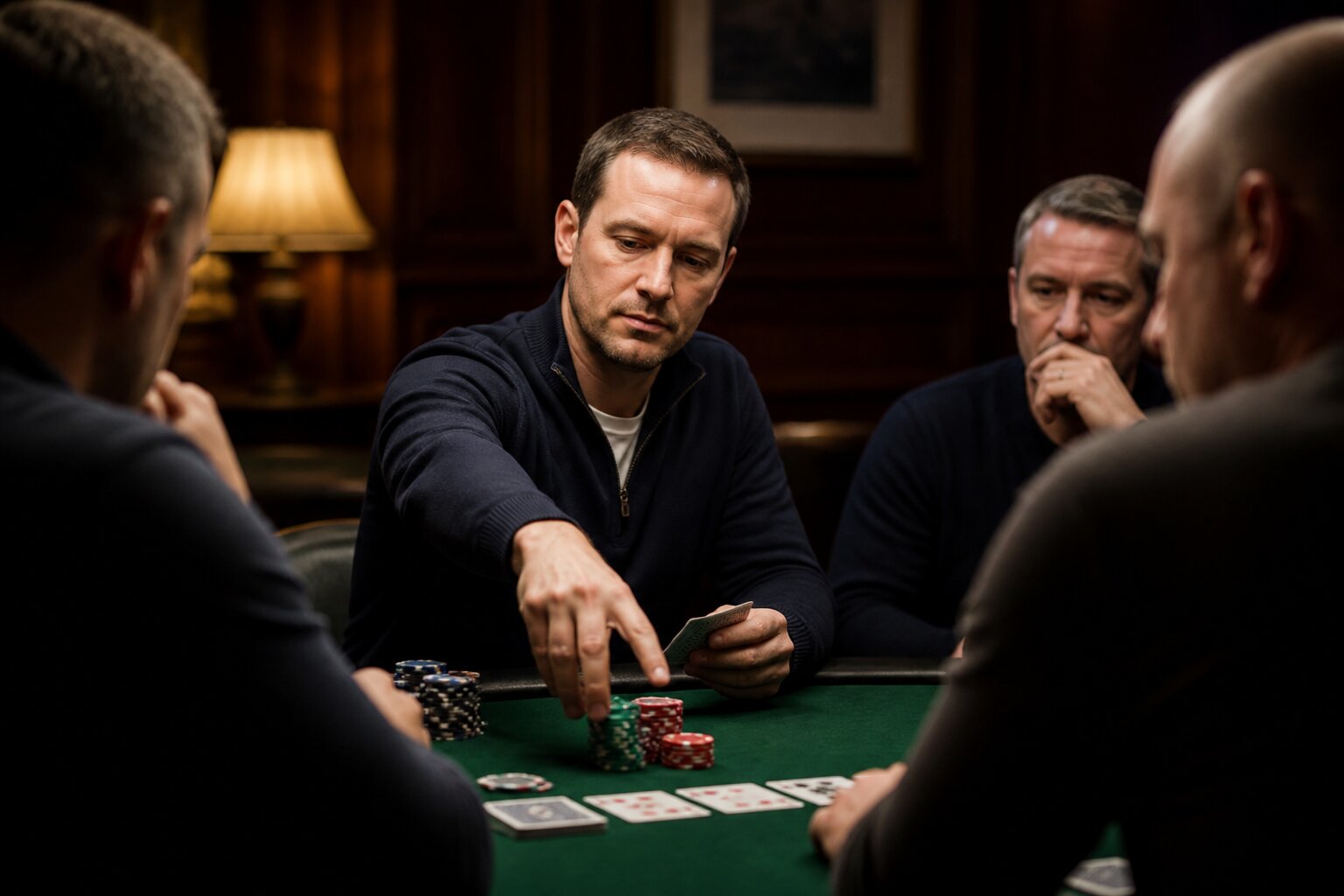
Ever watched a high-stakes poker game and heard someone mention a “snap call”? Wondering what it means or why players lean in when it happens?
This guide cuts through the jargon and gives you the essentials about snap calls—what they are, how they work, and why they matter at the table. Whether you’re new to poker or looking to sharpen your reads, understanding the snap call can change how you interpret other players’ actions.
Read on for a clear definition, a concrete example, and practical points to help you spot and respond to snap calls.
What Is a Snap Call in Poker?
A snap call is a very quick call made almost immediately after a bet, with little or no delay for thought. It signals that the caller reached a decision before it was their turn or that the choice felt obvious the moment the bet happened.
Players snap call for different reasons: confidence in their cards, a straightforward pot-odds calculation, or a deliberate table image. It is an action rather than a full strategy in itself; its value comes from the context of the hand and the read on opponents.
Understanding the speed of decision-making helps you interpret opponents’ likely reasoning, but the action alone does not prove the strength of a hand.
Why Do Poker Players Use Snap Calls?
Players employ snap calls for a mix of practical and psychological reasons. Practically, when the odds and information make the decision clear, acting quickly keeps the game moving and avoids unnecessary hesitation. Psychologically, an instant call can suggest certainty and potentially put pressure on the bettor.
Some players use snap calls to maintain a consistent image, while others do it purely from habit. In certain situations a snap call may force the aggressor to second-guess themselves; in others it simply reflects efficient decision-making.
The important point is that the timing of a call is one piece of information among many—cards, betting patterns and player tendencies all matter too.
How Does a Snap Call Differ From a Regular Call?
The main difference lies in timing and implication. A snap call is immediate and implies a pre-formed decision; a regular call involves a pause to consider the situation more carefully.
When players take a deliberate call they are often weighing specific factors, such as:
- pot odds,
- board texture,
- opponents' ranges.
Both actions result in matching the current bet, but they communicate different things to the table. A deliberate call may signal uncertainty, ongoing calculation or a desire to conceal strength, while a snap call usually suggests the player saw their course of action right away and is confident in it.
Recognising these nuances helps you evaluate opponents more accurately. It is important, however, not to over-read a single action without additional context: one snap or one slow call on its own rarely proves a pattern.
Always play responsibly and use a range of reads over time rather than relying on isolated behaviours.
Common Scenarios Where Snap Calls Occur
Snap calls tend to appear when the path is clear—either mathematically or narratively—based on the hand and the betting that has already happened. They are also more frequent in brisk games where fast play is expected.
Typical scenarios include:
- Facing a bet with a made hand that is unlikely to be outdrawn.
- Calling when the pot odds match the draw and the mathematics favour a call.
- Confronting an opponent whose timing or pattern of play suggests a bluff.
Spotting the pattern can give you a small edge in reading the table, but remember that quick decisions still carry risk and should be part of a disciplined approach to the game.
Below are a few concrete examples that show how these situations play out in practice.
Examples of Snap Calls at the Table
When a decision is straightforward, players often act without delay. Quick calls are a common feature of well-paced tables and usually reflect a clear thought process rather than carelessness.
Here are situations where that occurs.
Strong Hands
A player holds a full house or another very strong combination and calls immediately because they judge their hand to be ahead of the range their opponent represents. The instant call signals confidence in the relative strength of the hand and can discourage prolonged bluffing from the opponent.
Even with a dominant hand, it is sensible to consider the betting history and board texture before committing chips, to avoid rare but costly surprises.
Clear Odds
A player is drawing to a flush or straight and the current bet offers pot odds that justify a call. The math is clear, so the decision is made quickly. In these cases a snap call simply reflects a straightforward calculation rather than guesswork.
It is good practice to be aware of implied odds and stack sizes as well, because those factors can change whether a quick call is the correct long-term decision.
Bluffs Called Out
Based on previous betting patterns and non-verbal cues, a player suspects an opponent is bluffing and snap calls with a moderate hand to challenge that line. Quick calls can be a useful tool to punish frequent bluffers and to prevent them from exploiting hesitation.
When relying on reads, balance is important: misreading an opponent can lead to unnecessary losses, so use timing reads alongside other information such as bet sizing and past behaviour.
These examples show how context—hand strength, odds and reads—shapes the decision to call instantly. Always combine quick decision-making with sound risk management and awareness of the broader game dynamics.
Does a Snap Call Reveal Your Hand Strength?
A snap call can hint at confidence, but it does not reliably reveal hand strength. Some players call instantly with premium hands; others use the same timing as a deliberate psychological tactic to mislead opponents.
Experienced opponents will treat timing as one signal among many and will look for consistency across hands before drawing conclusions. Because players vary in style, a single instant call should not be taken as definitive evidence of strength or weakness.
Keeping attention on betting patterns and how a player’s timing fits their overall behaviour gives a clearer picture than focusing on one isolated action.
Snap Call Etiquette: What Should You Know?
Etiquette around snap calls focuses on clarity and respect. Make your call in turn and in a way that other players can see it—quiet, quick actions are acceptable, but ambiguous gestures that confuse the action should be avoided.
Do not rush or pressure others into decisions; the speed at which you act is your choice, but table harmony relies on allowing opponents reasonable time. Follow the house rules on action and announcements, and aim for straightforward, unhurried conduct when the situation requires it.
Good etiquette keeps the game fair and enjoyable for everyone, and it reduces disputes over action or intent.
Frequently Asked Questions About Snap Calls in Poker
Do I have to make snap calls to play well?
No. Acting quickly is not a requirement for competent play. Use whatever timing helps you make sound decisions and avoid mistakes.
Taking a little extra time can be useful when the situation is unclear, when you are under pressure, or when the action before you is complicated. Conversely, a quick call can be appropriate when the decision is obvious to you.
Are snap calls only used by experienced players?
No. Players of all levels may snap call when a decision appears obvious to them. Newer players sometimes snap call out of habit or nervousness, while experienced players may do so as a deliberate choice.
What matters most is the quality of the decision, not the player’s experience level. Observing how and when different opponents use quick calls can also be informative for your own game.
Is a snap call considered rude in poker?
Not by itself. A snap call is fine so long as it follows the rules and does not disrupt the table. Being mindful of others’ comfort is always advised.
Quick actions that create confusion, chip tricks that distract, or repeatedly rushing other players can be seen as poor behaviour. Keep your actions clear and courteous to maintain good table etiquette.
Can a snap call give away information about my hand?
It can provide a piece of information, but it should not be relied on alone. Timing is only one small part of the story.
Combine timing with other elements to form a clearer read, such as:
- the betting history during the hand
- the player’s general tendencies and past actions
- physical or online tells that are consistent and reliable
Use timing as one input among several rather than the sole basis for a decision.
Should I change my style to include more snap calls?
Adopt habits that suit your decision-making process and temperament. There is no need to mimic others unless it genuinely improves your play.
If quicker decisions help you avoid overthinking and make better choices, increase them selectively. If they lead to mistakes, slow down and be more deliberate. Regular review of your sessions will show what works best for you.
Is there ever a penalty for making a snap call?
No penalty applies as long as you act in turn and observe the rules. Problems arise only when actions are ambiguous, out of turn, or clearly intended to confuse.
If a quick action causes uncertainty, the dealer or floor staff may ask for clarification. Repeated breaches of table rules can attract warnings or sanctions, so keep your actions transparent and within the established guidelines.
Key Takeaways on Snap Calls in Poker
Snap calls are simply very quick calls made when a player sees their decision as obvious. They occur for practical reasons—such as clear odds—or for image and psychological effects at the table.
Recognise snap calls as one signal among many: consider the betting sequence, board texture and player tendencies before drawing conclusions. Maintain clear, respectful action and give others space to decide when needed.
Always manage your play within your limits and focus on sound decision-making rather than timing alone. Keep these points in mind and you will read the table more effectively while contributing to a fair game environment.
**The information provided in this blog is intended for educational purposes and should not be construed as betting advice or a guarantee of success. Always gamble responsibly.