
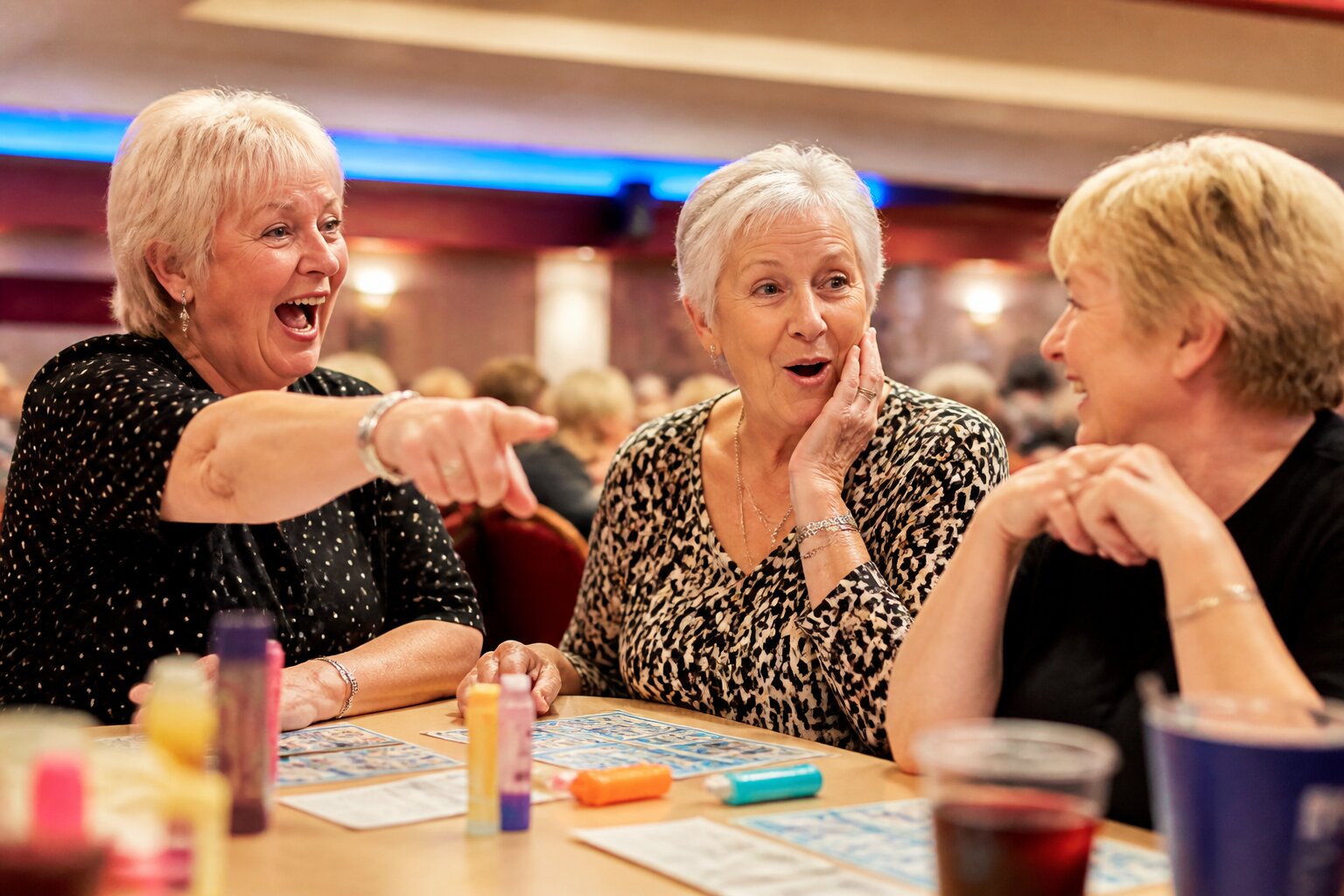
Bingo isn’t just about crossing off numbers and shouting “House!” — it’s packed with cheeky humour and iconic slang that keeps the game lively and social. Whether you’re a seasoned player or new to the scene, those famous calls— from classic rhymes to witty modern twists—are a big part of the experience.
Over the years, the traditional calls you might have heard in your nan’s day have been updated with pop culture references and a few risqué phrases sneaking in. If you’ve ever wondered what “two little ducks” means, or heard the giggles after “legs eleven”, you’re in the right place.
Get ready to discover the funniest and rudest UK bingo calls, plus the current slang making its way through bingo halls and online rooms.
What Are UK Bingo Calls And Why Are They Used?
Bingo calls are nicknames or short phrases used to announce each number during a game. In the UK, these calls often come as rhymes, jokes or memorable sayings rather than just the raw numbers, which helps players hear and recognise the call in a busy room.
Their practical purpose is to minimise confusion and keep the game moving smoothly, but they also add a social element: calls give callers a chance to entertain and players something to react to, which helps the atmosphere. Over time, callers and players have adapted older lines, inventing new ones that reflect trends or local jokes so the game stays current and sociable.
Calls vary by venue and audience, and callers tailor what they use so the language remains appropriate for the crowd. That balance between fun and respect keeps bingo welcoming and enjoyable.
How Many Standard Numbers Are In A UK Bingo Game?
A standard UK bingo session uses 90 numbers, from 1 to 90, in the format commonly called “90-ball bingo.” This is the traditional version played in community halls, bingo clubs and many online rooms across the UK. The draw always covers the full 1–90 range, so every number has an equal chance of being called during a game.
Each ticket contains 15 numbers arranged over three rows, and players mark off the numbers as they are announced. The usual aims are to complete a single line, two lines, or a full house, with different sessions varying the order or prizes attached to those patterns. Tickets and patterns are designed so many players can compete on the same card layout without confusion.
Callers use distinctive phrases and nicknames to make each number easy to remember and follow, especially when rooms are noisy or online chats are lively. These calling conventions help with clear communication and reduce disputes about whether a number was called. They also make the experience more social and memorable for players, particularly as the game moves on and more people are competing for the same patterns.
Where Do Rude And Modern Bingo Calls Come From?
Cheeky and modern calls have emerged naturally from bingo’s long social history. Callers, players and local communities have always enjoyed inventing fresh phrases—sometimes playful, sometimes suggestive—that riff on the shape of digits, rhymes, or popular culture.
Many of the naughtier-sounding lines are simply wordplay meant to provoke a laugh rather than offend. Regional humour, TV shows, current events and local landmarks often feed into new calls, giving each game a distinctive flavour. As more players move online, new generations continue to rework older calls so they fit today’s conversations.
Venues keep a watchful eye on tone; callers remove or adapt anything that might be genuinely offensive so the room stays comfortable for everyone.
Complete List Of Funny & Rude UK Bingo Calls
Below is a full collection of commonly used UK bingo calls. Each block groups numbers to make the list easier to scan, and the phrases shown are the ones most often heard across traditional and modern bingo settings.
1 to 10
These early numbers often have the sweetest rhymes and simplest word pictures: 1 – Kelly’s Eye; 2 – One Little Duck; 3 – Cup of Tea; 4 – Knock at the Door; 5 – Man Alive; 6 – Tom Mix; 7 – Lucky Seven; 8 – Garden Gate; 9 – Doctor’s Orders; 10 – Boris’s Den.
They set the tone at the start of a game, with many callers using little accents or stretches on the rhyme to make them stick. The simplicity helps newcomers follow along quickly.
11 to 20
A mix of cheeky and nostalgic lines appears here: 11 – Legs Eleven; 12 – One Dozen; 13 – Unlucky for Some; 14 – Valentine’s Day; 15 – Young and Keen; 16 – Sweet Sixteen; 17 – Dancing Queen; 18 – Coming of Age; 19 – Goodbye Teens; 20 – One Score.
These calls often bring a smile because they reference familiar ideas or milestones, and some get used more because they are instantly recognisable. Callers may slow down or add a chuckle on certain ones to heighten the effect.
21 to 30
This range contains several visual or playful references: 21 – Key of the Door; 22 – Two Little Ducks; 23 – Thee and Me; 24 – Two Dozen; 25 – Duck and Dive; 26 – Pick and Mix; 27 – Gateway to Heaven; 28 – Over Weight; 29 – Rise and Shine; 30 – Dirty Gertie.
They are handy for creating little images in people’s minds, which makes the calls memorable. Some bingo halls favour the sillier options here to keep the atmosphere lively.
31 to 40
Many of these calls are rhythmic and easy to shout: 31 – Get Up and Run; 32 – Buckle My Shoe; 33 – All the Threes; 34 – Ask for More; 35 – Jump and Jive; 36 – Three Dozen; 37 – More than Eleven; 38 – Christmas Cake; 39 – Steps; 40 – Naughty Forty.
Their rhythm helps when the caller needs to move through numbers quickly without losing clarity. A confident, punchy delivery tends to make these lines land best.
41 to 50
These work well when the game is getting underway and the pace picks up: 41 – Time for Fun; 42 – Winnie the Pooh; 43 – Down on Your Knees; 44 – Droopy Drawers; 45 – Halfway There; 46 – Up to Tricks; 47 – Four and Seven; 48 – Four Dozen; 49 – PC (Police Constable); 50 – Half a Century.
They include a few that are cheeky but mostly familiar, which is useful as attention levels fluctuates mid-game. Many callers time a small pause before or after these to add drama.
51 to 60
This section includes several old favourites that tend to stick in people’s heads: 51 – Tweak of the Thumb; 52 – Danny La Rue; 53 – Here Comes Herbie; 54 – Clean the Floor; 55 – Snakes Alive; 56 – Shotts Bus; 57 – Heinz Varieties; 58 – Make Them Wait; 59 – Brighton Line; 60 – Five Dozen.
These calls often carry a hint of nostalgia, particularly for regulars who have heard them for years. They are ideal for keeping a warm, communal feel on the floor.
61 to 70
These calls mix humour with familiar expressions: 61 – Baker’s Bun; 62 – Turn on the Screw; 63 – Tickle Me; 64 – Red Raw; 65 – Old Age Pension; 66 – Clickety Click; 67 – Made in Heaven; 68 – Pick a Mate; 69 – Either Way Up; 70 – Three Score and Ten.
A few here invite playful reactions from the crowd, and callers sometimes tailor the delivery to the mood of the room. They remain popular because they balance wit with recognisability.
71 to 80
Many of these are melodic and work well for lively floors: 71 – Bang on the Drum; 72 – Six Dozen; 73 – Queen Bee; 74 – Candy Store; 75 – Strive and Strive; 76 – Trombones; 77 – Sunset Strip; 78 – Heaven’s Gate; 79 – One More Time; 80 – Gandhi’s Breakfast.
Their musical quality makes them useful when a caller wants to lift the energy. They are favourites in evening sessions where the atmosphere is more animated.
81 to 90
Near the end of the range you’ll find a mix of energetic and familiar lines: 81 – Stop and Run; 82 – Straight On Through; 83 – Time for Tea; 84 – Seven Dozen; 85 – Staying Alive; 86 – Between the Sticks; 87 – Torquay in Devon; 88 – Two Fat Ladies; 89 – Nearly There; 90 – Top of the Shop.
These closing numbers often get an extra bit of emphasis as the game reaches its final stages, helping to build excitement. Callers will sometimes vary their tone to signal the game moving into a decisive phase.
Each phrase has its own character, and callers often develop a delivery or little flourish that helps the line land with a laugh or a groan. That variety is part of what keeps bingo social and entertaining for many players.
Most Popular Funny & Rude Bingo Calls Explained
A few calls have earned special affection because of their imagery or how easy they are to react to.
Legs Eleven (11) relies on a simple visual: the two digits together suggest a pair of legs, which often elicits a playful response from the room. Two Little Ducks (22) is famous for the quacking mimicry it can provoke, making it one of the most recognisable calls. Dirty Gertie (30) is a classic rhyme that callers sometimes punctuate with a humorous aside about “Gertie from number thirty.” Two Fat Ladies (88) draws on the shape of the digits, and Clickety Click (66) is memorable simply because it’s fun to say.
Explaining these highlights the variety in tone and origin: some are visual, some rhyme, and some borrow from local or cultural references. That variety is part of what keeps sessions engaging.
When you hear these lines, it’s usually the caller’s personality that makes them stick—so the same phrase can play very differently from one bingo night to the next.
Are Rude Bingo Calls Offensive Or Allowed In Halls?
Most calls aim to amuse rather than offend, and callers are expected to judge what suits their audience. Venues in the UK consider inclusivity important and will avoid language that could make players uncomfortable. Staff adapt calls, and themed nights or private events may use different tone to match the crowd.
Regulatory guidance also expects respectful conduct in gambling environments, and operators take steps to ensure the atmosphere is fair and welcoming. If a player is uneasy about a particular call, venues generally encourage feedback so they can adjust future sessions.
Moving on from tone and rules, it’s interesting to see how regional quirks shape what callers choose to use.
Regional Variations In UK Bingo Calls
Local flavour is one of bingo’s enduring charms: callers in different regions often add their own twists, whether that’s extra rhymes, references to a local celebrity, or lines that reflect dialect and humour.
Northern halls sometimes add friendly banter or extended rhymes, while cities with strong local identities might slip in a landmark or well-known name. Online rooms can mirror those variations with themed cards or special events that use regionally inspired calls, giving players a familiar touch even when they’re not in person.
These variations mean that a night in one town can feel distinct from a night somewhere else, which keeps the game fresh for regular players and offers a small local surprise to newcomers.
Final thought: whether traditional or updated, bingo calls are a social shorthand that help the game move, bring people together and give callers a chance to add personality. Enjoy the lines that make you smile, and if a phrase doesn’t sit right, those running the game will usually be happy to listen and adapt.
**The information provided in this blog is intended for educational purposes and should not be construed as betting advice or a guarantee of success. Always gamble responsibly.