
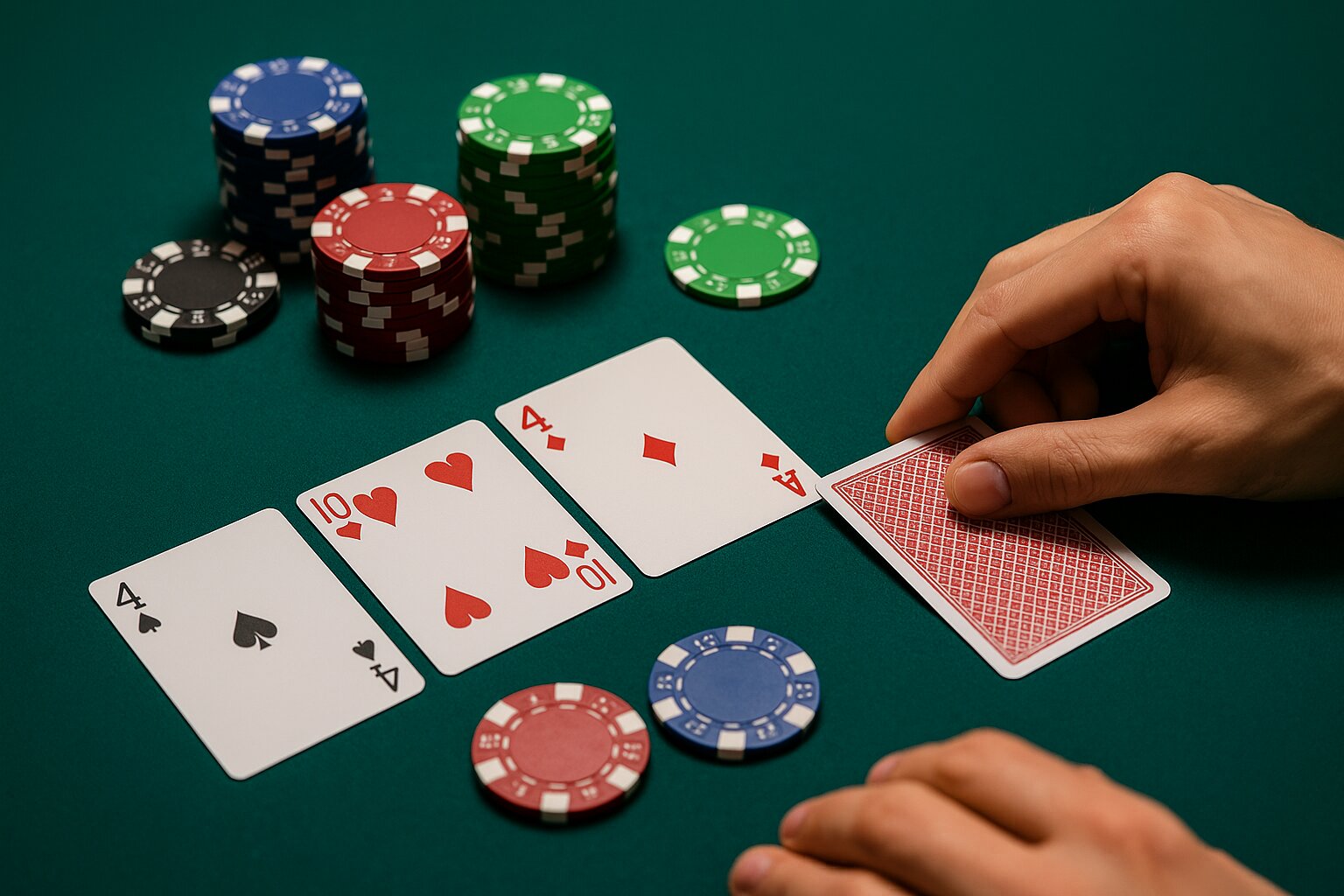
Thinking about stepping into the world of poker but unsure where to start? You’re not alone. Before you take your seat at the table, it helps to get to grips with a few fundamental terms—especially ‘call’, ‘raise’ and ‘fold’—so you can follow the action and make clear choices as you play.
These words come up in almost every hand and shape how each round unfolds. Read on and you’ll see what each action does in practice, why players use them, and how they affect the pot and your options at the table.
What Are the Basic Poker Actions?
Poker revolves around a small set of choices you make when it’s your turn. These basic actions determine whether you stay in the hand and how much you risk. The following sections explain each one and how it fits into a typical round, helping you follow the action and make measured decisions that suit your style and bankroll.
Call
When you call, you match the current highest bet placed by another player. Calling keeps you in the hand without increasing the amount at stake, so you can see the next card or reach a showdown while keeping your outlay in that round unchanged.
Players often use a call when they want more information before committing further chips. For example, you might call on the flop to see the turn if you have a drawing hand or a medium-strength holding that could improve. Calling can be sensible if the price to continue is small relative to the pot or your chance of improving is reasonable.
Raise
To raise is to increase the current bet. A raise forces other players to decide whether to match the new amount, re-raise, or fold. Raising is a more aggressive option and changes the dynamics of the hand immediately.
Raising can be used for different strategic reasons:
- to build the pot when you have a strong hand and want more value,
- to protect a strong holding by making potential draws more expensive,
- to apply pressure when you suspect opponents have weak or marginal hands.
A raise only makes sense when there is an existing bet to increase. If you are the first to put chips in that betting round, that action is called a bet rather than a raise. Be aware of table rules about minimum and maximum raise sizes, as these affect how much you can increase the stakes.
Fold
Folding means you abandon the hand and stop participating in that round. You place your cards face down and take no further action until the next deal.
Folding conserves your chips for better opportunities when your hand is unlikely to win or when the cost to continue is too high. Knowing when to fold is a key part of long-term success and bankroll protection.
Check
A check passes the turn without betting, but it is only available when no bet has been made in the current round. Checking keeps you in the hand at no extra cost while allowing the round to continue.
Checking can be used to control the size of the pot, to see another card for free, or to induce a bet from an opponent. Use it when you want to proceed cautiously, especially with a marginal hand or when out of position.
Bet
A bet is the first stake put into the pot during a betting round. Once a bet is made, the choices open to the other players are:
- call to match the bet,
- raise to increase it,
- fold to surrender the hand.
How much you bet matters. Bet sizing influences opponents’ decisions and affects pot odds, so consider the strength of your hand, the tendencies of other players, and the stage of the hand when choosing an amount.
These actions combine to create the strategic flow of poker. Understanding them gives you the language to follow a hand and the framework to make choices that suit your style and bankroll. Remember to play responsibly and within limits you can afford.
How Is Calling Used at the Poker Table?
Calling comes into play after someone else has opened the betting or made a raise. By matching that amount you remain in contention for the pot without escalating the betting further. It is a measured way to continue when you want to see more cards or avoid committing additional chips prematurely.
Good callers balance pot odds and hand potential. For example, if the pot size and the cost to call make it profitable to chase a draw, calling can be the sensible option. Conversely, calling repeatedly with weak hands against aggressive opponents can be costly, so reading the table and the size of bets is important.
If no one has bet, calling is not an option; instead players may check or start the betting with a bet. A mindful approach to calling helps you preserve your stack and stay active in hands that merit further investment.
What Does It Mean to Raise in Poker?
Raising changes the dynamics of the hand by increasing the amount required to stay in. It can be used in several ways: to protect a made hand by charging drawing hands more to continue, to build value when you expect to win at showdown, or to force opponents into folding weaker holdings.
The size of a raise matters. A modest raise might be used to probe how other players respond, while a larger raise can signal strength and deter calls. In many formats there are customary minimum sizes and increments that shape how raising plays out.
Because a raise commits more chips, players usually consider position, stack sizes and opponents’ tendencies before raising. Done well, a raise can shift the advantage in your favour; done poorly, it can expose you to costly re-raises or multiple callers.
What Happens When You Fold?
Folding removes you from the current contest for the pot. It is a defensive option that preserves chips when the odds of winning are not compelling or when the price to continue is too high compared with the hand’s prospects.
Folding also has strategic value beyond simply cutting losses. By folding, you avoid marginal situations and allow yourself to re-enter the action in later hands where conditions are more favourable. Skilled players fold often and deliberately; it is part of disciplined play rather than an admission of weakness.
Once folded, your cards are no longer in play and you will wait for the next hand to participate again. This pause gives time to observe how others play their hands and use that information in future decisions.
Why Are Call, Raise & Fold Important in Poker?
These three actions are the bones of poker. Together they determine how chips move around the table, how information is revealed, and how players exert pressure or concede ground. Knowing when to use each action shapes your short-term results and long-term strategy.
More than vocabulary, they are tools for controlling risk and extracting value. Calls keep you involved without overcommitting, raises extract value or protect hands, and folds prevent you from wasting chips in unfavourable spots. Mastering when and why to choose each option is central to becoming a competent player.
To make sensible choices you weigh the pot size, bet sizes, position, stack depths and the tendencies of opponents. That blend of factors informs whether a call, a raise or a fold is appropriate in any given moment.
Can Beginners Easily Recognise These Poker Terms?
Most beginners pick up these terms quickly once they watch a few hands or join a casual game. Hearing the words used in context, seeing the effect on the pot, and practising in low-stakes situations helps turn the terms into instinctive actions.
Take time to observe how others react to raises and bets, and notice how hand strength, position and bet sizing influence decisions. That exposure builds practical understanding far faster than memorising definitions alone.
If you feel uncertain, start with small stakes and focus on recognising each action’s role in the round rather than on complex strategy. Confidence grows with experience and thoughtful observation.
Common Misconceptions About Call, Raise & Fold
Several myths circulate among new players that can cloud decision-making. One is the idea that folding is equivalent to failure; in fact, folding is often the correct, disciplined choice and a sign of good judgement. Another misconception is that raising is only for advanced players — raising is simply another option and can be used effectively by anyone who understands the table context.
Some believe that calling is passive or weak. While indiscriminate calling can be costly, deliberate calls based on pot odds or to conceal information have clear tactical uses. Finally, there is no single action that is always right; good poker is about choosing the action that best fits the situation.
If something about these actions feels confusing, returning to examples at the table or studying hands you’ve played can make the concepts clearer.
Summary of Essential Poker Terms
Here’s a concise refresher to keep handy as you play.
Call
Matching the current highest bet to stay in the hand without increasing the stake.
Raise
Increasing the current bet to force opponents to put in more chips if they wish to continue.
Fold
Abandoning the hand and taking no further part in that round.
Understanding these actions helps you participate with more control and clarity. Play at levels that suit you, set limits you can stick to, and enjoy poker as a test of decision-making and observation.
**The information provided in this blog is intended for educational purposes and should not be construed as betting advice or a guarantee of success. Always gamble responsibly.