
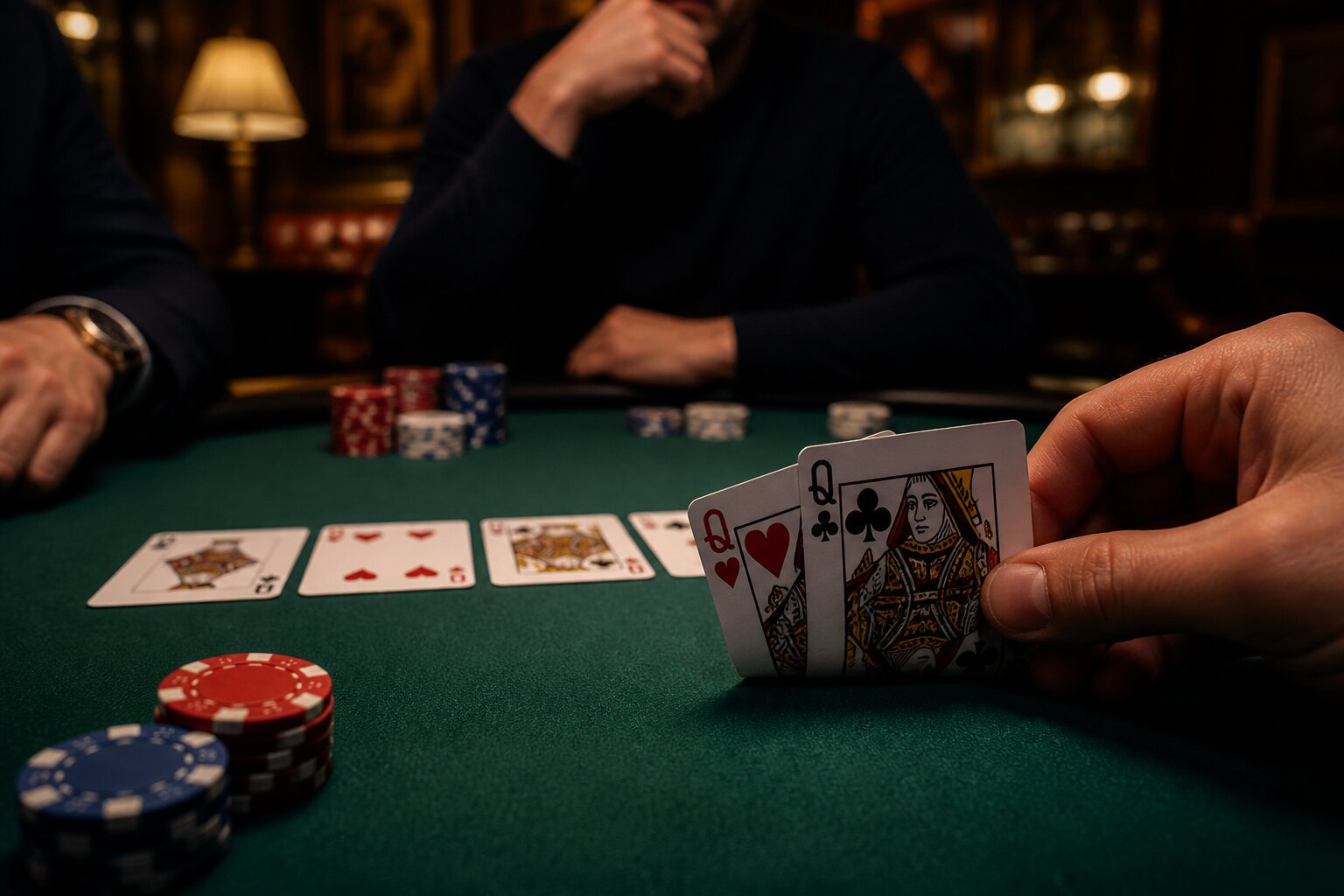
Ever wondered why some poker hands make opponents fold quickly? A lot of the time it’s because a player has a set — a compact but powerful combination that can change how a hand plays out.
If you’ve heard people talk about “hitting a set” and felt a bit lost, this guide will clear it up. We’ll explain what a set is, how it differs from similar hands, and how to recognise one in play, with clear examples that make the idea stick.
Ready to sharpen your hand-reading and feel more confident at the table? Let’s get started.
What Does "Set" Mean in Poker?
A “set” happens when you hold a pocket pair — two cards of the same rank in your private hand — and a third card of that same rank appears among the community cards. For instance, holding two eights and seeing another eight on the flop gives you a set of eights.
Because two of the matching cards are private to you, a set is less visible to opponents than some other three-of-a-kind hands. That hidden nature is what makes it strategically valuable: it can let you extract value or conceal strength depending on how the betting unfolds.
A quick note before we move on: forming a set requires starting with a pocket pair, so it isn’t an everyday occurrence and tends to be a notable moment when it happens.
This distinction is key, so keep it in mind as we look at how a set differs from other three-of-a-kind hands.
How Is a Set Different from Three of a Kind?
Both a set and three of a kind mean you have three cards of the same rank, but they’re made in different ways.
A set is formed from a pocket pair plus one matching community card. “Trips” (often called three of a kind) are formed when you have a single matching card in your hand and the other two matching cards are on the board. For example, two fives in your hand plus another five on the flop is a set; one queen in your hand plus two queens on the board is trips.
The practical consequence is that a set is harder for opponents to see coming, since two key cards are concealed. Trips are more visible because two matching cards are already on the board and so are part of the shared information all players can use.
Understanding this difference helps with both betting decisions and hand-reading, so keep it in mind as you follow the examples that follow.
How Do You Make a Set in Poker?
To make a set you must be dealt a pocket pair and then see a matching rank appear among the community cards during the same hand. In games with shared cards, such as Texas Hold’em, the necessary matching card most often arrives on the flop, though it can appear on the turn or river as well.
Because you rely on being dealt a pocket pair to begin with, hitting a set is relatively infrequent compared with many other hand developments. When it does occur, the set’s concealed nature gives you options: you can build the pot by playing for value or keep the pot smaller while keeping opponents in the dark, depending on the situation and table dynamics.
With that process in mind, the next section shows clear, real-hand examples to make the concept concrete.
What Are Examples of a Set in Real Poker Hands?
Seeing practical examples helps make the idea clear. Below are a few simple scenarios showing how a set can form during play.
Classic Set Scenarios Explained
Example 1
You are dealt two sevens as your starting hand. The flop comes down 2♠, 7♣, 10♦. The seven on the board completes your pocket pair, giving you a set of sevens.
This is a very strong hand on the flop because it is well concealed: opponents often do not expect you to have such hidden strength. However, you should remain aware of possible four of a kind or straight and flush draws on later streets.
Example 2
Your hole cards are two kings. The flop shows K♦, 4♠, 9♥. One king on the board matches your pair, so you now hold a set of kings.
A set of kings will usually be ahead of single-pair or many draw hands, but it can still be outdrawn or trapped by a full house on the turn or river. Consider the board texture and opponent actions when deciding how aggressively to play.
Example 3
You start with two fives. The flop comes 8♣, 2♦, 5♠, which pairs your pocket fives with the board to make a set.
Small sets can be deceptive because they are hard for opponents to read. They are strong for winning a large pot but vulnerable to higher sets or completed straights and flushes later in the hand.
Each of these examples highlights the same structure:
- two matching private cards
- plus one matching community card
Next, we will cover how sets fit into the broader rules and hand rankings so you know what to expect when one appears.
What Rules Apply When Playing a Set?
A set follows the same hand-ranking rules as any three-of-a-kind hand: it beats two pairs but is beaten by straights, flushes, full houses and four of a kind. The way you count and compare hands does not change just because your three of a kind originated as a pocket pair.
Game-specific requirements vary. In Texas Hold’em you make a set with your two hole cards and one board card; in Omaha you must use exactly two hole cards and three from the board, which affects how sets can form. In stud variants there may be no community cards at all, so the term “set” is used less often even if three of a kind is present.
There are no special betting rules tied to having a set — play proceeds under the usual order of action and betting structure. Strategic choices about betting and disclosure are what distinguish a strong set from a vulnerable one, depending on the board texture and the opponents’ likely holdings.
Now that you know the rules, the next section compares how sets behave across different poker variants.
Are Sets the Same in All Poker Variants?
The core idea of three cards of the same rank is consistent across most forms of poker, but the term “set” is most relevant in games with community cards.
In Texas Hold’em the definition is straightforward: a pocket pair matched by one board card. Omaha follows the same concept but with the stricter requirement that exactly two hole cards must be used, so the ways a set can appear are more constrained. In stud games, where players receive a mix of face-up and face-down cards, players will still make three of a kind but typically call it by the more general term rather than “set.”
The subtle differences between variants change how often sets occur and how easily other players can read them, which in turn affects strategy. With that context, let’s clear up some common misconceptions that can lead players astray.
Common Myths About Sets in Poker
Several misconceptions about sets can influence how people play. One is the belief that a set automatically wins — while a set is strong, it can be beaten by higher-ranked hands such as straights, flushes and full houses. Another myth is that sets are frequent; because they require a pocket pair plus a matching board card, they are less common than many players expect.
There’s also the mistaken idea that opponents will always miss a set; while sets are often hidden, attentive players will notice betting patterns and board texture that can give them clues. Recognising these realities helps keep expectations realistic and supports better decision-making at the table.
Next, we’ll look at why players put particular value on sets and what makes them strategically useful.
Why Are Sets So Important in Poker?
Sets matter because they combine relative rarity with the advantage of concealed strength. Since two matching cards are private, a player with a set can sometimes extract value by disguising their hand strength or build a large pot when the board and opponent reads suggest it’s safe to do so.
Beyond raw strength, sets interact with board texture and opponent tendencies. A dry board with few straight or flush possibilities makes a set more likely to be the best hand; a coordinated board increases the risk of being outdrawn or already behind. The timing of when the third matching card appears (flop, turn or river) also affects how the hand plays, as later appearances give opponents more information to act on.
In short, sets are important not because they win automatically but because they offer flexible strategic options when recognised and played with awareness of the surrounding factors.
Play responsibly, follow local regulations, and treat poker as entertainment.
**The information provided in this blog is intended for educational purposes and should not be construed as betting advice or a guarantee of success. Always gamble responsibly.