
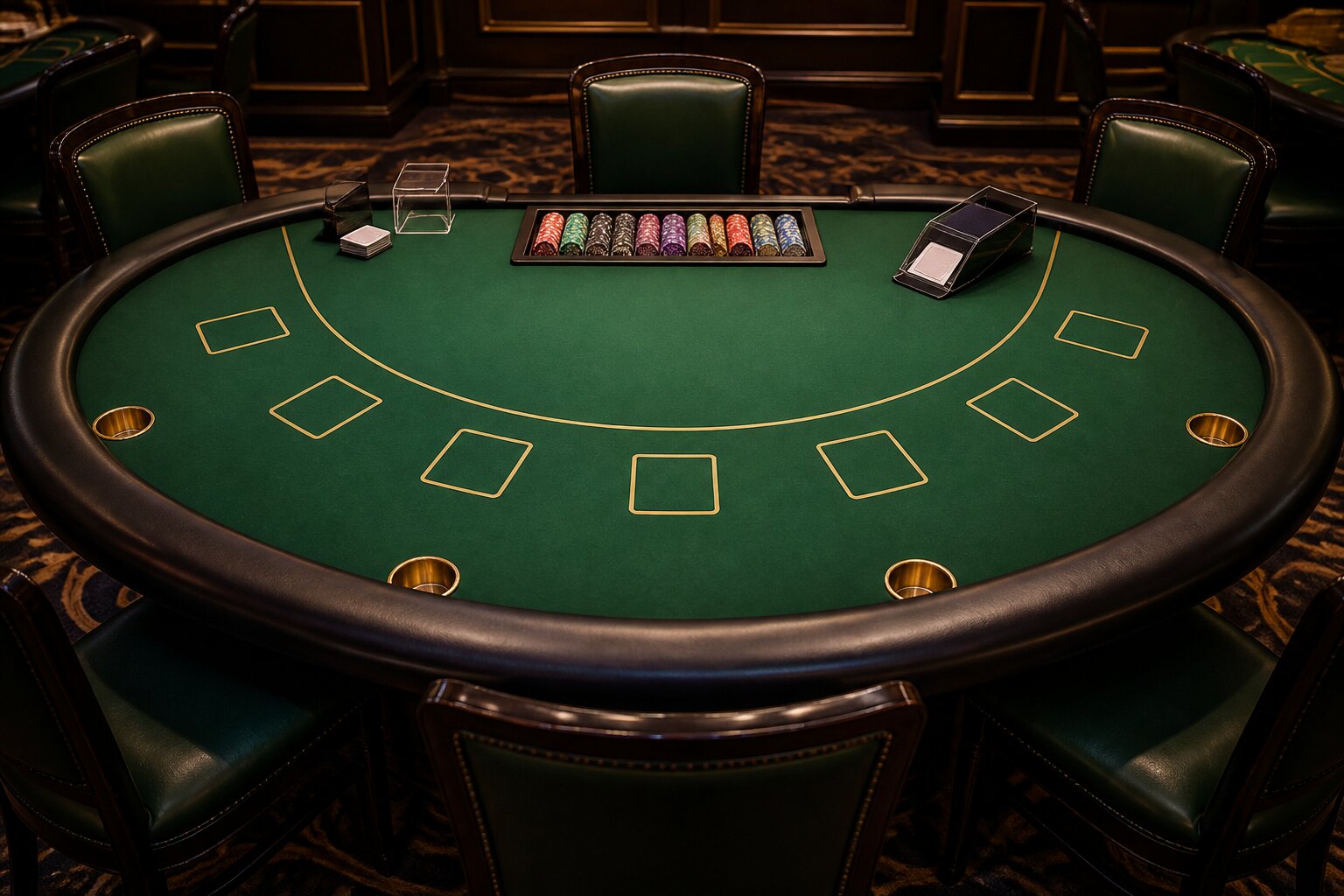
Ever wondered if where you sit at a blackjack table could change the way the game feels? The seat you choose affects pace, attention from the dealer, and how much time you have to consider your moves.
This guide explains each player position, what they do, and practical reasons you might prefer one over another. Read on to find the seat that matches the way you like to play.
Why Does Seat Position Matter in Blackjack?
At first glance, every seat might look the same, and in terms of odds and rules they are. All players are dealt from the same deck and the house edge does not change with position.
Where you sit does affect the rhythm of play. Some seats act earlier in the betting round and move faster, while others let you see more of the hand before you make a decision. Position also influences social interaction at the table and how visible you are to the dealer and other players.
These are practical differences rather than competitive ones. If you prefer to think a little longer or to observe other players’ choices first, your seat can help create that experience.
Overview of Player Positions at a Blackjack Table
A typical blackjack table holds five to seven players arranged around a semicircle facing the dealer. Each place has a conventional name based on where it sits relative to the dealer.
The far right seat is commonly called “first base” and the far left is “third base.” Seats between them are usually referred to as middle positions. Play proceeds from first base around to third base, which means each seat has a fixed order in the round.
Choosing a seat is largely down to taste: whether you like being among the first to act, prefer to wait, or enjoy the social flow in the middle of the table.
Is There a Difference Between First Base and Third Base?
The labels “first base” and “third base” describe only the order of play. First base acts immediately after the cards are dealt and third base acts last before the dealer plays their hand.
That order changes the tempo of the game and the amount of information you have before deciding. First base moves more quickly and sees fewer actions from other players, so decisions are made with less visible context. Third base watches more of the round develop, seeing how others play their hands and any additional cards that are revealed before having to choose how to respond.
The underlying rules, payouts, and the house edge remain the same in either seat; the practical difference is about pace and perspective. Some players prefer first base for a faster game and to set a tone early, while others favour third base for the extra information and time to consider their decision. Ultimately, which seat feels better is a matter of personal preference and how you like to play.
What Is the Dealer’s Role Relative to Player Positions?
The dealer sits opposite the players and manages the flow of the game. They deal cards in order from first base to third base, then resolve each hand according to the house rules. This sequence ensures play proceeds in a clear, predictable way for everyone at the table.
The dealer follows a set procedure when playing their own hand, so their actions are consistent rather than discretionary. They do not normally make ad hoc strategic decisions; instead they apply the predetermined rules that govern play. This helps maintain fairness and reduces the potential for disputes.
Their role includes several routine duties:
- Enforce the rules and ensure players follow house procedures
- Deal cards and manage the shoe or deck
- Collect losing bets and pay winning bets
- Keep play moving smoothly and handle practical table matters
Because the dealer acts after all players, seating order determines who makes decisions before the dealer does. That is why position influences the tempo of the game rather than the final outcome. Players seated earlier must act without knowing later players' choices, which affects decision timing but not the dealer’s impartial application of the rules.
How Many Seats Are There at a Typical Blackjack Table?
Most tables accommodate five to seven players, which balances space and the number of hands dealt each round. Some venues may have smaller or larger tables, but seven is common.
Table size affects how long it takes between your turns and how many hands you will be involved in over a session. A fuller table increases the waiting time between hands; a smaller table speeds the rotation.
Consider these practical differences when choosing a table:
- Fuller table: slower pace, more time to observe other players and the dealer, often a more social atmosphere.
- Smaller table: faster play, more hands per hour, and more opportunity to apply short-term strategies.
Pick a table size that fits how quickly you want to play, how social you want the experience to be, and how it suits your bankroll and session length. Set limits and play responsibly.
Pros and Cons of Each Blackjack Table Seat
Seat choice shapes the feel of the game. The differences are about convenience, tempo and social interaction rather than mathematical advantage.
Think about whether you want to act early, watch actions unfold or enjoy a balance between the two. Each spot offers trade-offs in terms of:
- decision time at the table,
- how much you can see of other players’ moves,
- and the level of attention you receive from the dealer and tablemates.
The First Base Seat Explained
First base is ideal for players who prefer a brisk pace. Acting first means you spend less time waiting and do not have other players’ choices slowing your rhythm.
This seat also reduces the chance of being influenced by others, which some players find helps them stick to a clear strategy. On the downside, acting early gives you fewer cues to observe, so if you rely on watching others before you decide, this seat can feel a bit hurried.
The Middle Seats Explained
Middle seats provide a compromise between quick action and observation. Players here see the decisions of those before them, which can make the game feel more relaxed and social.
These seats suit people who enjoy conversation and a moderate tempo, as there is often more interaction around the table. On the other hand, having more players between your turns can lengthen the time you spend waiting, which might interrupt focus or reduce the total number of hands you play.
The Third Base Seat Explained
Third base is the last player to act before the dealer, giving you the fullest picture of the round as it unfolds. That perspective can be useful if you like to assess several moves and outcomes before making your choice.
Because decisions here occur just before the dealer plays, the seat often attracts attention from other players and staff. If you prefer a quieter, less conspicuous spot, third base may feel more exposed, but for some it offers a strategic overview and a chance to influence the table’s tone.
Does Seat Selection Affect Your Gameplay Experience?
Seat selection shapes the atmosphere and pace of a session. If you enjoy a quick game, seats near first base tend to suit you. If you like to observe and take more time, a later seat or a middle position is a better match.
Comfort and view are practical considerations too. A seat that gives you space and a clear sightline to the dealer and layout will help you focus and enjoy the session more.
Choosing a seat that fits your preferred tempo and social interaction will make the difference to how much you enjoy your time at the table.
Common Myths About Blackjack Table Positions
There are many misconceptions about seat choice. A frequent one is that certain seats somehow improve a player’s odds. In reality, position does not alter the rules, payouts, or house edge. All players face the same dealer procedures and the same deck composition over time, so a different seat will not change the long-term mathematics of the game.
Another myth is that the last player to act controls the outcome for others. While third base decisions are visible and can feel dramatic, they do not affect the mathematical fairness of the hand. The order of play only determines which hands are resolved first; it does not change the probability of particular cards appearing or alter the dealer’s required actions.
Some people believe seat choice affects short-term luck, but short-term variance can make any seat seem fortunate or unlucky at times. Those swings are a natural part of the game and are not caused by where you sit.
Understanding these points helps you focus on what really matters: comfort, pace, and how you like to play. Pick a seat where you can see the cards clearly, where the dealer’s speed suits your preference, and where you feel relaxed and able to stick to your strategy.
How to Choose Your Seat at a Blackjack Table
Choosing a seat comes down to matching the environment to your preferences. Consider how quickly you want to play, whether you enjoy table conversation, and whether you want a more private or more social spot.
A quick, action-oriented player may prefer first base; someone who values observation and deliberation may lean toward third base or a middle seat. Also consider practicalities such as chair comfort and clear sightlines to the dealer and layout.
Before you sit, decide what kind of session you want. Keep limits in mind and make choices that help you enjoy the game responsibly.
**The information provided in this blog is intended for educational purposes and should not be construed as betting advice or a guarantee of success. Always gamble responsibly.